Datun – The Hidden Truth That Your Dentist Never Told You
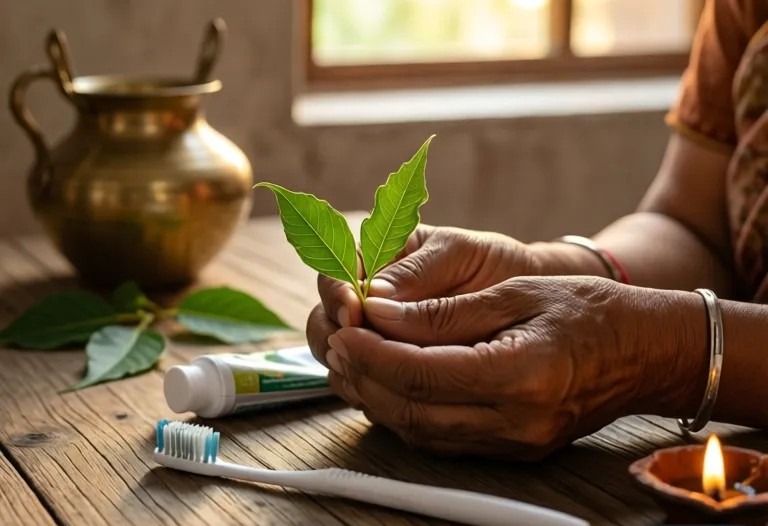
Close your eyes for a moment and travel back in time. Imagine waking up at dawn, walking to the backyard, and snapping a fresh neem twig from the tree your grandmother planted years ago. You chew one end until it softens into bristles, then gently scrub your teeth. The bitterness fills your mouth, but somehow it feels right. Clean. Pure.
This was datun – the ancient Indian toothbrush. And for thousands of years, it wasn’t just a tool. It was a sacred morning ritual, a part of the daily Ayurvedic routine known as Dincharya. Fast forward to today.
Your bathroom shelf probably holds a plastic toothbrush, a tube of toothpaste with a complicated ingredient list, maybe a bottle of mouthwash. And that’s not wrong. Modern oral care has given us convenience, consistency, and scientific validation.
But here’s the beautiful truth that the multi-billion dollar oral care industry doesn’t want you to know. Your grandmother’s neem twig might be just as effective as your expensive toothpaste.
According to the Indian Dental Association, only 28% of people in India brush twice a day, and 85% suffer from dental cavities. That’s not just a brushing problem; it’s a how-we-brush problem. And perhaps, a what-we-brush-with problem.
The global oral care market is growing rapidly, with the Indian dental care market alone valued at $653 million in 2022 and projected to reach $1339 Mn billion by 2030 . Brands like Clove Oral Care are leading this revolution, combining the antibacterial power of clove oil with modern dental science .
But what if you didn’t have to choose between ancient and modern? What if the best oral care routine is one that honors both, the wisdom of Ayurveda and the precision of modern science? This is the story of oral care across millennia. And by the end, you’ll never look at your toothbrush the same way again.
🪥 READY TO TRANSFORM YOUR ORAL CARE? Discover premium oral care products that blend ancient wisdom with modern science. Shop the Herbodent Neem 7-in-1 toothpaste here →
Neem, Black Seed & Xylitol for Anti Cavity
The Ancient Roots of Oral Care – What Grandmother Knew
The First Toothbrushes: From Chewing Sticks to Datun
Long before nylon bristles and fluoride toothpaste, humans were cleaning their teeth with what nature provided.
The earliest rudimentary methods of teeth-cleaning included chewing on bark or sticks, discovered in Babylonia as early as 3500 BC . The Ancient Greeks and Romans used feathers and bones as toothpicks. The first recorded evidence of mouth rinsing appears in Chinese texts dating back to 2700 BC. But in India, the practice of oral care was elevated to an art and a science.
Datun: The Sacred Morning Ritual
In Ayurveda, the practice of dant dhavan (teeth cleaning) is described as an essential part of the Dincharya (daily routine). The Sanskrit verse “Prabhate dantadhavanam” emphasizes that upon waking, cleaning one’s teeth is not optional – it’s a non-negotiable duty .
But here’s what’s remarkable: Ayurveda didn’t recommend just any stick. It prescribed specific trees, each with its own therapeutic properties:
| Tree Twig (Datun) | Ayurvedic Property | Modern Scientific Validation |
|---|---|---|
| Neem (Azadirachta indica) | Bitter, antibacterial, antiseptic, astringent | Proven antimicrobial activity against oral pathogens |
| Babool (Acacia) | Astringent, strengthens gums | Contains tannins that tighten gum tissue |
| Karanj | Antibacterial, anti-inflammatory | Effective against plaque-forming bacteria |
| Licorice (Mulethi) | Sweet, soothing, anti-inflammatory | Reduces gum inflammation and bad breath |
| Mango | Astringent, cooling | Natural breath freshener |
When you chew a neem twig, the fibers create a natural floss that reaches between teeth. The bitter juice acts as an antiseptic mouthwash. And the act of chewing stimulates saliva production – nature’s own mouth cleanser .
One Indian dental surgeon put it simply: “The chewing stick, which is the forefather of the modern-day toothbrush, has in many studies been found to be better at preventing tooth decay when compared to the toothbrush” .

Spiritual T-Shirts for Women
Dant Manjan: The Herbal Tooth Powder
Alongside datun, ancient Indians used dant manjan, a powdered blend of herbs, minerals, and salts.
Ingredients in traditional dant manjan :
- Cow dung ash (scientifically: contains minerals that strengthen enamel)
- Five salts (mineral-rich, naturally abrasive)
- Camphor (antibacterial, breath freshener)
- Clove (analgesic, numbs tooth pain)
- Triphala (antioxidant-rich, heals gums)
- Neem (antibacterial)
- Mint (cooling, freshens breath)
Ayurveda claims that dant manjan is effective on “all oral diseases such as tooth worms and stops tooth decay”. It also “reduces the sensitivity in teeth, the swelling of gums, cures ulcers of the tongue, sore throats, tonsillitis, and pyorrhea” .
And here’s what modern research confirms: these ingredients genuinely have antibacterial, anti-inflammatory, and astringent properties that benefit oral health.
Read About This Miracle Indus Valley Depigmentation Gel Here.
Ancient Mouthwashes: More Than Just Fresh Breath
It’s a misconception that mouthwash is a modern invention. The Chinese and Indians have used medicinal decoctions for centuries .
Traditional mouth rinse ingredients :
- Tulsi (Holy Basil) : Antibacterial, reduces gum inflammation
- Amla (Indian Gooseberry) : Rich in Vitamin C, strengthens gums
- Cranberry juice : Prevents bacteria from adhering to teeth
- Ginger : Anti-inflammatory
- Guava leaves : Antimicrobial, reduces plaque
Scientific studies have proven that these traditional mouthwashes are as effective as chlorhexidine, the main component of most modern mouthwashes .
The Spiritual Significance of Oral Care
In ancient India, oral care wasn’t just about preventing cavities. It was about purity. The mouth was considered the gateway to the body. Cleaning it each morning was an act of preparing the sacred vessel – the body – for the day’s prayers, meals, and interactions.
A clean mouth meant:
- Clear speech (essential for chanting mantras)
- Pure breath (respectful when offering prayers)
- Healthy digestion (the first step of digestion begins in the mouth)
- Positive energy (bad breath was considered inauspicious)
This holistic understanding—that oral health affects everything—is something modern science is only now catching up to.
🌿 BRING ANCIENT WISDOM HOME: Experience the power of Ayurvedic oral care with The Herbal Store Botanical Toothpaste. Made with traditional ingredients for modern mouths. Shop on Amazon →
Fluoride Free, Sulphate Free, Sugar Free
The Science of Modern Oral Care – What Works and Why
The Four Causes of Tooth Decay
Modern dentistry has identified four factors that must be present for tooth decay to occur :
| Factor | Explanation | How to Disrupt It |
|---|---|---|
| Susceptible host | Weak enamel, thin dentin | Fluoride, remineralizing agents |
| Bacteria | Streptococcus mutans and others | Antibacterial agents, proper brushing |
| Fermentable carbohydrates | Sugars that bacteria feed on | Reduce sugar intake, brush after meals |
| Time | Bacteria need time to produce acid | Brush and floss regularly |
If any one of these factors is missing, cavities don’t form. This is why both ancient and modern oral care focus on disrupting these four elements.
Fluoride: The Controversial Hero
Modern toothpaste contains fluoride, a mineral that:
- Remineralizes weakened enamel
- Makes teeth more resistant to acid attacks
- Reduces the ability of bacteria to produce acid
But fluoride has its critics. Some studies suggest that excessive fluoride can cause dental fluorosis (white spots on teeth) in children. This is why many natural oral care brands now offer fluoride-free options.
The Color Code on Toothpaste Tubes: What Does It Mean?
Every toothpaste tube has a color code at the very end :
| Color Code | Meaning |
|---|---|
| Green | 100% natural ingredients |
| Blue | Natural + medicine-based ingredients |
| Red | Natural + chemical ingredients |
| Black | 100% chemical – should be avoided |
This simple guide can help you make informed choices at the store.
Modern Oral Care Innovations
The oral care market has exploded with innovations:
- Electric toothbrushes with pressure sensors and timers
- Water flossers that use high-pressure water jets
- Whitening strips with peroxide-based formulas
- Charcoal toothpaste for natural whitening
- Probiotic lozenges that support healthy oral bacteria
- Aligners like AlignerCo for straightening teeth without metal braces
✨ Shop Clove Ultimate Oral Care Tooth Paste on Amazon →
The Dabur Red Oral Care Approach
Brands like Dabur Red are bridging ancient and modern. Their products combine:
- Clove oil – used in Ayurveda for centuries for its antibacterial and analgesic properties
- Modern dental science – clinically tested formulations
- Clean ingredients – no harsh chemicals
- Sustainable packaging – environmentally conscious
“Dabur is more than just a dental care brand, it’s a daily wellness ritual”.
Formulated with traditional Indian medicines. Packed with the power of 13 active Ayurvedic ingredients
Ayurvedic vs. Modern Oral Care – A Detailed Comparison
Datun vs. Toothbrush
| Factor | Datun (Neem/Babool twig) | Modern Toothbrush |
|---|---|---|
| Material | Natural, biodegradable | Plastic, non-biodegradable |
| Bristles | Natural plant fibers | Nylon/polymer |
| Flossing effect | Yes – fibers reach between teeth | No – requires separate floss |
| Antibacterial action | Yes – from the plant’s sap | No – unless toothpaste provides it |
| Gum massage | Excellent – chewed tip massages gums | Good – depends on bristle softness |
| Convenience | Low – requires preparation | High – ready to use |
| Consistency | Variable – depends on twig quality | Consistent – manufactured to standards |
| Environmental impact | Minimal – biodegradable | Significant – plastic waste |
Dant Manjan vs. Toothpaste
| Factor | Dant Manjan (Herbal Powder) | Modern Toothpaste |
|---|---|---|
| Ingredients | Natural herbs, minerals, salts | Often contains chemicals, preservatives |
| Abrasiveness | Moderate – natural exfoliation | Varies – some are too harsh |
| Fluoride | No | Yes (most brands) |
| Taste | Bitter, earthy | Sweet, minty (often artificial) |
| Shelf life | Long (dry powder) | 1-2 years |
| Packaging | Usually glass or paper | Plastic tube (non-recyclable) |
| Cost per use | Very low | Moderate |
What the Experts Say
Experts believe that while datun has antibacterial benefits, toothpaste is more effective for specific conditions like sensitivity & pyorrhea. Brushing twice daily is non-negotiable regardless of what you use . Dental surgeons claim that traditional methods like chewing sticks and herbal powders are more effective than modern toothbrushes and toothpaste at preventing tooth decay. The truth likely lies in the middle; both have their place.
🪥 TRADITIONAL MEETS MODERN: Try Dabur Meswak Complete Oral Care Toothpaste – the goodness of miswak in a convenient tube. Shop on Amazon→
With pure extract of rare Miswak herb (Salvadora Persica) also known as the Toothbrush Tree.
How to Create Your Ideal Oral Care Routine – Ancient + Modern
Step 1: Choose Your Tools
You don’t have to abandon your toothbrush for a neem twig. But you can incorporate ancient wisdom into your modern routine.
Option A (Full Modern):
- Soft-bristled toothbrush (electric or manual)
- Fluoride or natural toothpaste
- Dental floss
- Mouthwash
Option B (Hybrid – Recommended):
- Soft-bristled toothbrush for daily use
- Neem or babool datun 1-2 times per week
- Herbal toothpaste (with neem, clove, or triphala)
- Oil pulling (coconut or sesame oil) 2-3 times per week
Option C (Traditional):
- Neem or babool datun for brushing
- Herbal dant manjan powder
- Herbal mouth rinse (tulsi or amla decoction)

Spiritual T-Shirts for Men
Step 2: Master the Technique – The Modified Bass Method
Modern dentistry recommends the Modified Bass brushing technique :
- Hold your toothbrush at a 45-degree angle toward the gumline
- Use gentle back-and-forth motions in short strokes (tooth-wide)
- Brush outer surfaces, then inner surfaces, then chewing surfaces
- Don’t forget your tongue (where most bad breath bacteria live)
If using datun, chew the end until it becomes fibrous, then use it like a toothbrush, focusing on the gumline and between teeth.
Step 3: The “After-Meal” Protocol
Timing matters. According to dental experts, after eating, the enamel temporarily softens due to acid produced by bacteria. Brushing immediately can erode enamel .
The correct sequence:
- After eating, rinse with water (or traditional mouth rinse)
- Wait 30 minutes (enamel re-hardens)
- Brush as usual
Step 4: Add Oil Pulling (Ancient Detox)
Oil pulling is an ancient Ayurvedic practice where you swish oil in your mouth for 10-20 minutes.
How to do it:
- Take 1 tablespoon of coconut or sesame oil
- Swish it around your mouth (do not swallow)
- Continue for 10-15 minutes
- Spit into a trash can (not the sink – it can clog pipes)
- Rinse with warm water and brush as usual
Benefits: Reduces plaque, whitens teeth, freshens breath, and may reduce harmful bacteria in the mouth.
Step 5: Don’t Forget Your Tongue
The tongue harbors bacteria that cause bad breath. Use a tongue scraper (traditional copper or stainless steel) or your toothbrush to gently clean your tongue each morning.
Step 6: Regular Dental Checkups
No amount of home care replaces professional cleaning. Visit your dentist every 6 months for:
- Professional cleaning (scaling)
- Cavity detection
- Gum health assessment
🦷 UPGRADE YOUR ORAL CARE ROUTINE: The Sri Sri Tattva Sudanta Original Toothpaste has goodness of herbs for complete oral care. Shop the oral paste here at Amazon→
Oral Care Through Life’s Stages
Oral Care for Children
Ancient perspective: Children were given softer datun (mango or neem) and herbal powders with milder abrasives.
Modern perspective:
- Use age-appropriate toothpaste (fluoride or fluoride-free)
- Supervise brushing until age 7-8
- Make it fun – colorful brushes, flavored toothpaste
Affiliate products: Kid-friendly toothbrushes, fluoride-free toothpaste, fun flossers
Formulated with natural ingredients such as Triphala, Mulethi, Khadir, etc.
Oral Care During Pregnancy
Ancient perspective: Pregnant women were advised to use cooling herbs like licorice and avoid strong astringents.
Modern perspective: Hormonal changes during pregnancy can cause pregnancy-induced gingivitis – swollen, bleeding gums. If a pregnant woman gets periodontal disease, the risk of premature delivery increases .
Recommendations:
- Continue brushing twice daily
- Use a soft-bristled brush
- Consider a natural toothpaste without harsh chemicals
- See your dentist – dental care is safe during pregnancy
Oral Care for Seniors
Common issues: Dry mouth (medication side effect), gum recession, root decay, tooth loss
Recommendations:
- Use a toothpaste for sensitive teeth if needed
- Consider an electric toothbrush if dexterity is limited
- Stay hydrated to combat dry mouth
- Regular dental visits are critical
Oral Care for Orthodontic Patients
If you have braces or aligners, oral care becomes more challenging but more important.
Recommendations:
- Use a water flosser to clean around brackets
- Interdental brushes for between teeth
- Avoid whitening products until after treatment
- Clean aligners daily with a soft brush and clear soap
The Ancient-Modern Bridge – Ingredients That Work in Both Worlds
Some ingredients have been used for millennia and are now validated by modern science.
Neem (Azadirachta indica)
Ancient use: Datun, dant manjan, mouth rinses
Modern validation: Antibacterial, antiplaque, anti-inflammatory
Found in: Natural toothpastes, mouthwashes, chewing sticks
Clove (Syzygium aromaticum)
Ancient use: Toothache remedy, breath freshener, dant manjan ingredient
Modern validation: Analgesic (numbs pain), antibacterial, antioxidant
Found in: Clove Oil toothpaste (Clove Oral Care), dental numbing gels
Triphala (Three Fruits)
Ancient use: Gum strengthening, mouth ulcers, overall oral health
Modern validation: Antioxidant-rich, anti-inflammatory, reduces plaque
Found in: Herbal tooth powders, natural toothpastes
Tulsi (Holy Basil)
Ancient use: Mouth rinses, gum health
Modern validation: Antimicrobial, reduces gum inflammation
Found in: Herbal mouthwashes, natural toothpastes
Amla (Indian Gooseberry)
Ancient use: Gum strengthening, vitamin C source
Modern validation: High in Vitamin C (essential for collagen/gum health), antioxidant
Found in: Herbal tooth powders, dietary supplements
Miswak (Salvadora persica)
Ancient use: Chewing stick used across the Middle East and South Asia
Modern validation: WHO recommends it for oral hygiene; contains natural antibacterial agents
Found in: Miswak sticks, miswak-infused toothpaste
🌿 NATURAL INGREDIENTS, MODERN CONVENIENCE: Jagat Devsutra Ayurvedic HERBAL Activated Charcoal Toothpaste combines activated charcoal (modern) with neem and aloe (ancient). Shop on Amazon→
No Artificial Colors | Fluoride-Free | All Natural
Common Oral Care Mistakes – And How to Fix Them
Mistake #1: Brushing Too Hard
The problem: Over time, aggressive brushing erodes enamel and causes gum recession.
The fix: Use a soft-bristled toothbrush and gentle pressure. Your toothbrush bristles should last 3 months without fraying.
Mistake #2: Brushing Immediately After Eating
The problem: Enamel is softened by acid from food. Brushing immediately erodes it.
The fix: Wait 30 minutes after eating before brushing. Rinse with water immediately if you need to freshen up.
Mistake #3: Storing Your Toothbrush Wrong
The problem: Keeping your toothbrush in a closed container promotes bacterial growth.
The fix: Store it upright in open air, away from the toilet. Replace every 3 months.
Mistake #4: Using the Wrong Toothpaste for Your Needs
The problem: Whitening toothpaste can be too abrasive for sensitive teeth; fluoride-free may not protect against cavities.
The fix: Match your toothpaste to your specific concern (sensitivity, whitening, cavity prevention, gum health).
Mistake #5: Ignoring Your Tongue
The problem: Most bad breath bacteria live on your tongue, not your teeth.
The fix: Use a tongue scraper or brush your tongue gently each morning.
Mistake #6: Rinsing After Brushing
The problem: Rinsing immediately after spitting washes away concentrated fluoride.
The fix: Spit excess toothpaste, but don’t rinse for at least 30 minutes. Let the fluoride continue working.
Mistake #7: Believing Social Media “Hacks”
Dentists warn: People should not fall prey to social media videos that claim to make teeth shine. Once enamel is damaged, you may suffer from many oral issues .
Safe whitening options:
- Professional whitening (dentist)
- Whitening strips with peroxide
- Baking soda occasionally (not daily)
- Oil pulling (gentle, over time)
🪥 AVOID THESE MISTAKES: The NEOPFYSI Organic Bamboo Toothbrush has charcoal activated soft bristles designed to help you brush correctly. Shop Now →
Product Recommendations – Curated for Every Need
Best Natural/Ayurvedic Toothpastes
| Brand | Key Ingredients | Best For | Price |
|---|---|---|---|
| Biotique Clove & Tulsi Complete Care Toothpaste | Clove oil, neem, fluoride-free option | Complete oral wellness | ₹299-399 |
| Dabur Meswak Complete Oral Care Toothpaste | Neem, aloe vera, herbal extracts | Daily protection | ₹150-250 |
| Himalaya Ayurveda | Neem, mint, herbal extracts | Gum health, fresh breath | ₹120-200 |
| Vicco Vajradanti | Traditional Ayurvedic herbs | Classic Ayurvedic care | ₹100-180 |
| Dabur Red Paste | Clove, laung, herbal extracts | Affordable daily care | ₹80-150 |
Best Dant Manjan (Herbal Tooth Powders)
| Product | Key Ingredients | Best For | Price |
|---|---|---|---|
| Dabur Dant Manjan | Clove, mint, camphor, triphala | Traditional powder users | ₹80-120 |
| Vithoba Ayurvedic Dant Manjan | Vajradanti, clove, camphor | Strong antibacterial action | ₹90-140 |
| Patanjali Dant Kanti | Neem, clove, babool, mint | Everyday herbal care | ₹70-110 |
Best Toothbrushes
| Type | Brand | Features | Price |
|---|---|---|---|
| Manual soft-bristle | Oral-B, Colgate, Clove | Gum protection, tongue scraper | ₹80-200 |
| Electric | Oral-B, Philips Sonicare | Timer, pressure sensor | ₹1,500-8,000 |
| Bamboo (eco-friendly) | Various brands | Biodegradable, natural | ₹200-400 |
Best Mouthwashes
| Product | Key Features | Best For | Price |
|---|---|---|---|
| Clove Oral Care Mouthwash | Alcohol-free, clove oil | Complete oral wellness | ₹299-399 |
| Listerine Total Care | Fluoride, antibacterial | Cavity prevention | ₹200-350 |
| Herbal alternatives | Tulsi, amla decoction (DIY) | Natural, chemical-free | Minimal |
Best Oil Pulling Oils
| Product | Key Features | Price |
|---|---|---|
| Coconut oil (organic) | Antimicrobial, pleasant taste | ₹300-500 for 500ml |
| Sesame oil (cold-pressed) | Traditional Ayurvedic choice | ₹250-400 for 500ml |
Best for Orthodontics
| Product | Features | Price |
|---|---|---|
| AlignerCo aligners | Affordable alternative to Invisalign | ₹50,000-1,00,000 |
| Water flosser | Cleans around braces and aligners | ₹3,000-8,000 |
| Interdental brushes | Cleans between teeth and brackets | ₹200-500 for set |
Frequently Asked Questions
Q1: Is neem datun really better than a toothbrush?
A: Studies have shown that chewing sticks can be as effective, if not more effective, than toothbrushes at reducing plaque and preventing tooth decay . However, toothbrushes are more convenient and consistent. The best approach may be using both.
Q2: What’s the difference between dant manjan and toothpaste?
A: Dant manjan is a dry powder made from natural herbs, minerals, and salts. Toothpaste is a wet paste that often contains fluoride, detergents, and preservatives. Both clean teeth, but dant manjan is entirely natural and has been used for centuries in Ayurveda .
Q3: Is fluoride safe?
A: In recommended amounts (1000-1500 ppm in toothpaste), fluoride is safe and effective at preventing cavities. However, excessive fluoride (especially in children) can cause dental fluorosis. If you prefer fluoride-free options, many natural toothpastes are available.
Q4: How do I read the color code on toothpaste tubes?
A: Look at the very end of the tube (the crimped edge). You’ll see a small colored rectangle :
- Green = 100% natural
- Blue = Natural + medicine
- Red = Natural + chemicals
- Black = 100% chemicals (avoid)
Q5: Can oil pulling replace brushing?
A: No. Oil pulling is a supplement, not a replacement. It reduces bacteria but does not remove plaque mechanically. Always brush and floss. Add oil pulling as an extra step 2-3 times per week.
Q6: Is charcoal toothpaste safe?
A: Used occasionally (1-2 times per week), charcoal toothpaste can whiten teeth. But daily use can be too abrasive and erode enamel. Follow product instructions and don’t brush aggressively.
Q7: How often should I visit the dentist?
A: Every 6 months for routine cleaning and checkup. If you have gum disease, frequent cavities, or orthodontic treatment, your dentist may recommend more frequent visits.
Q8: Is Ayurvedic oral care scientifically proven?
A: Many Ayurvedic ingredients have been scientifically validated: neem (antibacterial), clove (analgesic), triphala (antioxidant), and miswak (antiplaque). The formulations themselves have less research, but the individual ingredients are effective .
Q9: Can I use dant manjan with a regular toothbrush?
A: Yes! Dip your damp toothbrush into the powder and brush as usual. This combines the convenience of a toothbrush with the natural benefits of dant manjan.
Q10: What’s the best oral care routine for someone who wants both ancient and modern?
A:
- Morning: Oil pulling (10 min) → Brush with herbal toothpaste → Tongue scrape
- During day: Rinse with water after meals
- Night: Floss → Brush with fluoride toothpaste (or dant manjan) → Don’t rinse
Conclusion – The Best of Both Worlds
Here’s the beautiful truth that neither the Ayurveda purists nor the modern dental industry will tell you. You don’t have to choose.
The ancient wisdom of datun, dant manjan, and oil pulling is not obsolete. And the modern convenience of toothbrushes, fluoride toothpaste, and electric flossers is not evil. They are two sides of the same coin – both aiming for the same goal: a healthy, beautiful, pain-free mouth.
Your grandmother’s neem twig was effective because it combined mechanical cleaning (the fibers) with chemical cleaning (the antibacterial sap). Your modern toothbrush does the mechanical part well; your toothpaste does the chemical part.
So why not combine the best of both? Use a soft-bristled toothbrush for daily cleaning. Add a neem datun once a week as a deeper, natural treatment. Choose a toothpaste that honors Ayurvedic ingredients – like clove, neem, or triphala – while still giving you the benefits of modern formulation.
And remember: oral care is self-care. In ancient India, cleaning your teeth each morning was not a chore. It was a sacred ritual – a way of preparing your body for the day, of honoring the vessel that carries your soul.
You can reclaim that. Stand at your sink. Pick up your toothbrush (or your neem twig). And as you brush, set an intention: I am caring for my body. I am honoring myself. I am continuing a tradition that spans millennia.
Your mouth will be cleaner. Your breath will be fresher. And your spirit? Just a little bit lighter. Now go brush. Your ancestors would be proud.
Disclaimer: This article contains affiliate links. If you purchase through these links, we may earn a commission at no extra cost to you. All products are independently selected and reviewed. This article is for informational purposes only and does not constitute medical advice. Always consult your dentist before changing your oral care routine.