The Sacred Truth About Ubtan That Modern Skincare Forgot
Close your eyes for a moment.
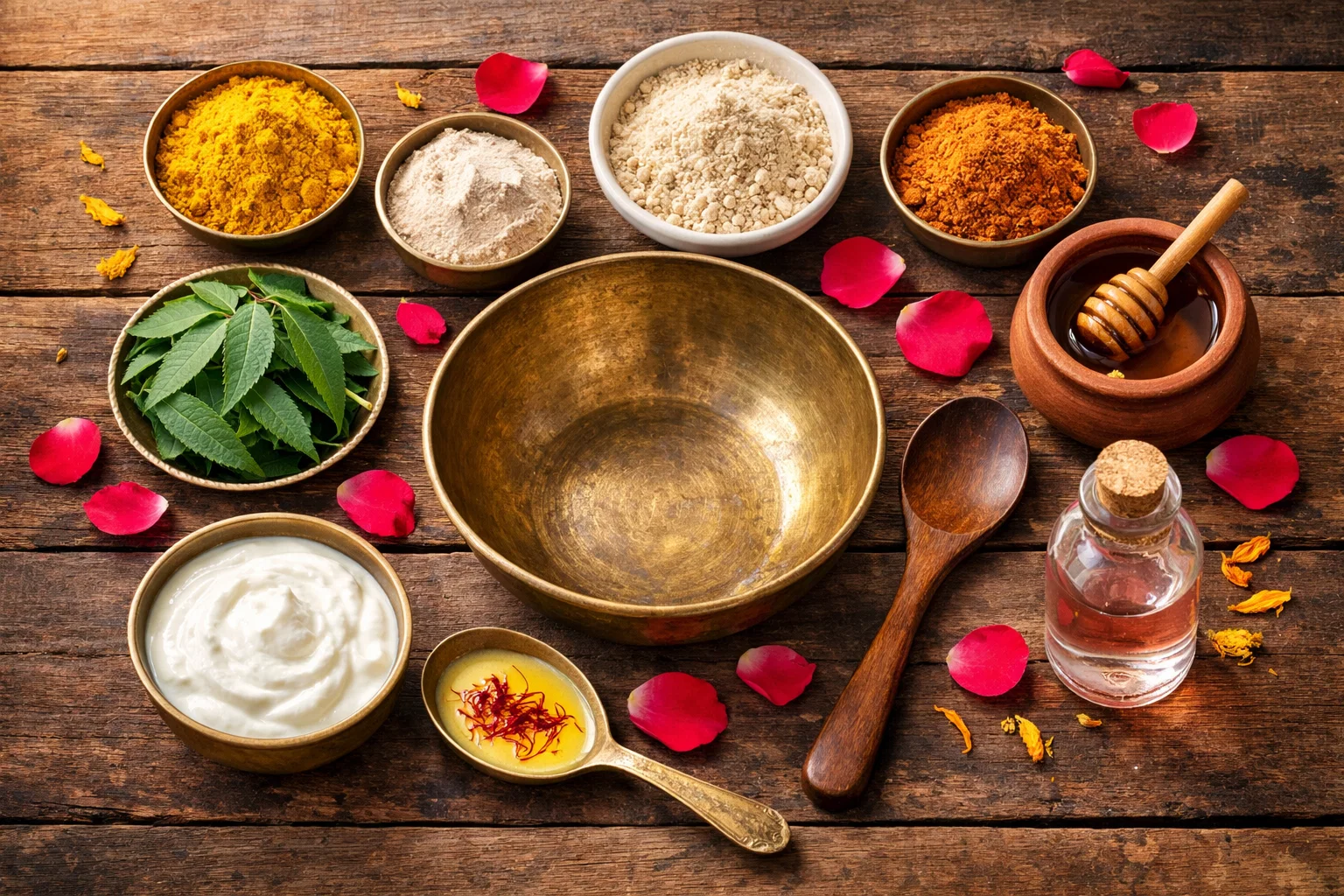
Can you smell it? That warm, earthy, golden aroma, turmeric mingling with sandalwood, a whisper of rose, the faint creaminess of milk. Can you feel it? The gentle hands of your grandmother or mother or aunt, mixing a golden paste in a brass bowl, humming an old tune as she prepares to bless your skin.
This is ubtan. Not a face pack. Not a “detox mask.” Not another product in a plastic jar with a price tag that makes you wince.
Ubtan is a living tradition. A ritual that has been passed down through generations of Indian women for thousands of years. It is mentioned in the ancient Ayurvedic texts, the Sushruta Samhita and Charaka Samhita, as a sacred preparation for purification, beauty, and health .
The word “ubtan” itself comes from the Sanskrit “Uttan” , meaning to apply or smear . But its meaning runs deeper. Ubtan is the first layer of bridal adornment, one of the essential rituals of the Solah Shringar, the sixteen sacred adornments of a woman. Before the jewelry, before the silk, before the maang tikka, there was ubtan.
And here’s the beautiful truth that the modern beauty industry doesn’t want you to know. Your grandmother’s ubtan works better than most of the expensive serums in your bathroom. Not because the ingredients are rare or expensive. But because ubtan was never just about “skincare.” It was about ritual. About intention. About slowing down and honoring your body as sacred.
The Haldi ceremony, that joyful, messy, beautiful pre-wedding ritual, isn’t just for brides. It’s a reminder that purification precedes transformation. Before a woman steps into a new chapter of her life, she is anointed with ubtan. Blessed by the women who came before her. Prepared not just on the outside, but on the inside.
So before you reach for another chemical peel or overpriced face mask, let me walk you through the ancient wisdom of ubtan. We’ll explore the science behind each golden ingredient. We’ll learn the traditional recipes that grandmothers have guarded for centuries. We’ll discover modern products that honor this tradition. And most importantly, we’ll reclaim the ritual, the slow, mindful act of self-care that ubtan has always represented.
Because your skin deserves more than quick fixes. It deserves sacred attention.
🕉️ BEGIN YOUR UBTAIN RITUAL: The journey to radiant skin starts with pure, authentic ingredients. Explore our curated collection of organic ubtan essentials, from turmeric to sandalwood to rose water. [Shop the Sacred Ubtan Collection →]
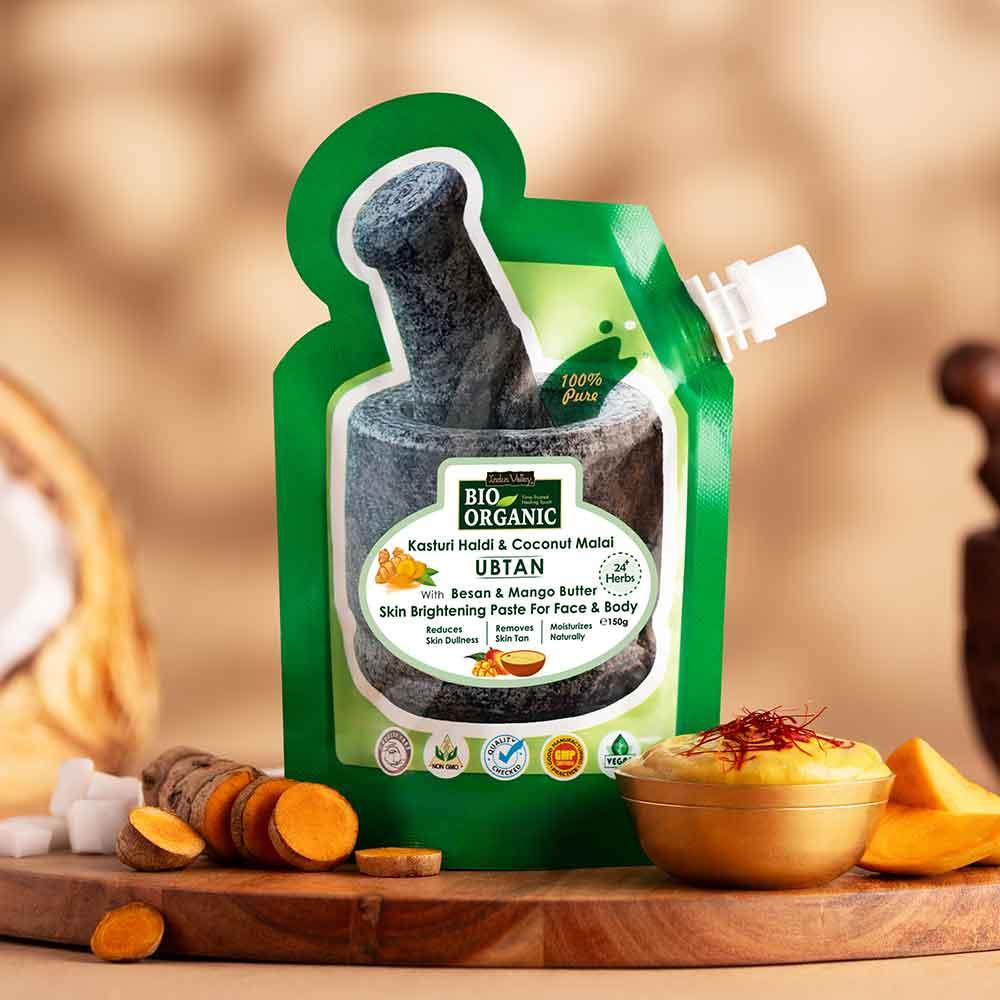
For skin brightening infused with 24 herbs.
The Ancient Roots – Ubtan in Ayurveda & Indian Tradition
What is Ubtan?
At its simplest, ubtan is a paste made from a blend of herbs, grains, spices, and sometimes oils or milk. But to reduce it to a recipe is to miss the point entirely.
Ubtan is ceremony. For centuries, across every region of India, ubtan has been an integral part of:
- Pre-wedding rituals (the Haldi ceremony)
- Festival preparations (Diwali, Karva Chauth)
- Postpartum care (for new mothers)
- Daily self-care (for women of all ages)
The ingredients vary by region, by family, by season, by skin type. But the intention remains the same: purification, beautification, and blessing.

Spiritual T-Shirts for Women
Ubtan in the Solah Shringar
The Solah Shringar, the sixteen adornments of a woman, includes ubtan as one of the foundational rituals . Before a bride wears her jewelry, her silk, her maang tikka, her gajra, she is first adorned with ubtan. This is not accidental. The sixteen adornments include :
| Adornment | Significance |
|---|---|
| Ubtan | Purification and beautification of the skin |
| Hairstyle (Keshapasharachana) | Foundation of beauty |
| Maang Teeka | Marks the Ajna Chakra (third eye) |
| Sindoor | Symbol of marriage and completeness |
| Bindi | Sacred mark |
| Karnphool (Earrings) | Frames the face |
| Nath (Nose ring) | Worn on left nostril |
| Haar & Mangalsutra | Necklaces symbolizing union |
| Bajuband (Armlet) | Wards off evil eye |
| Choodiyan (Bangles) | Wishes for husband’s long life |
| Kamarbandh (Waistband) | Enhances saree, represents prosperity |
| Payal & Bichuas | Anklets and toe rings |
| Mehendi | Love and affection |
| Anjana (Kajal) | Enhances beauty of the eyes |
| Itar (Perfume) | Keeps bride fresh and fragrant |
| Bridal Outfit | Foundation of the adornment |
Ubtan comes first because it prepares the canvas. It clears away the old, the dull, the impure. It makes space for the new, the radiant, the blessed.
The Haldi Ceremony – More Than a Bridal Tradition
The Haldi ceremony is perhaps the most visible surviving ubtan tradition. The night before or morning of the wedding, the bride (and often the groom) is anointed with a paste of turmeric, sandalwood, rose water, and other ingredients. But this isn’t just about giving the bride a “glow.”
Spiritual significance of the Haldi ceremony:
- Purification: Turmeric is believed to ward off evil spirits and negative energy
- Blessing: Each woman who applies ubtan to the bride offers a silent prayer for her happiness and fertility
- Protection: The yellow paste is said to protect the bride from the “evil eye” during the vulnerable transition to married life
- Community: The ritual brings women together—mothers, grandmothers, aunts, sisters, friends—in an act of collective love and support
One bride shared her experience: “Applying ubtan was not just a skin treatment. It was a moment of bonding, laughter, and blessings. My mother’s hands trembled as she applied the paste to my face—not because she was nervous, but because she was holding back tears. That ubtan carried her love, her hopes, her prayers for me.”
Ubtan in Daily Life – How Grandmothers Used It
Beyond weddings, ubtan was a daily or weekly ritual for women across India.
- Morning ritual: A quick ubtan application before the bath, left on while chanting prayers or preparing for the day
- Weekly self-care: A longer, more luxurious application on Sundays or festival eves
- Seasonal adjustment: Cooling ingredients (sandalwood, rose) in summer; warming ingredients (turmeric, ginger) in winter
My own grandmother used to say: “Ubtan is like talking to your skin. You don’t shout. You don’t rush. You listen. You learn what it needs. And you give it gently.”

Spiritual T-Shirts for Women
The Forgotten Wisdom – Why We Stopped (and Why We’re Returning)
So what happened? Why did so many of us abandon this ancient ritual?
The answer is complex:
- Colonial influence: Western beauty standards dismissed traditional practices as “backward” or “unscientific”
- Urbanization: Busy city lives left little room for slow, mindful rituals
- Marketing: The beauty industry convinced us that “natural” wasn’t enough—we needed chemicals, preservatives, and complicated routines
- Shame: Somewhere along the way, we started feeling embarrassed about the “desi” practices our grandmothers swore by
But here’s what’s beautiful: the return is already happening. Young women are rediscovering ubtan. Not as a “traditional thing” to be tolerated, but as a conscious choice—an act of reclaiming heritage, rejecting chemical overload, and embracing slow beauty.
One young professional shared: “I used to spend thousands on high-end face masks. Then my mother visited and brought homemade ubtan. My skin has never looked better. Now I make it myself every Sunday. It’s my ritual. My time. My connection to the women in my family.”
🌿 RECLAIM THE RITUAL: Ready to bring ubtan back into your life? Start with the purest ingredients. Shop organic ubtan essentials on Amazon →
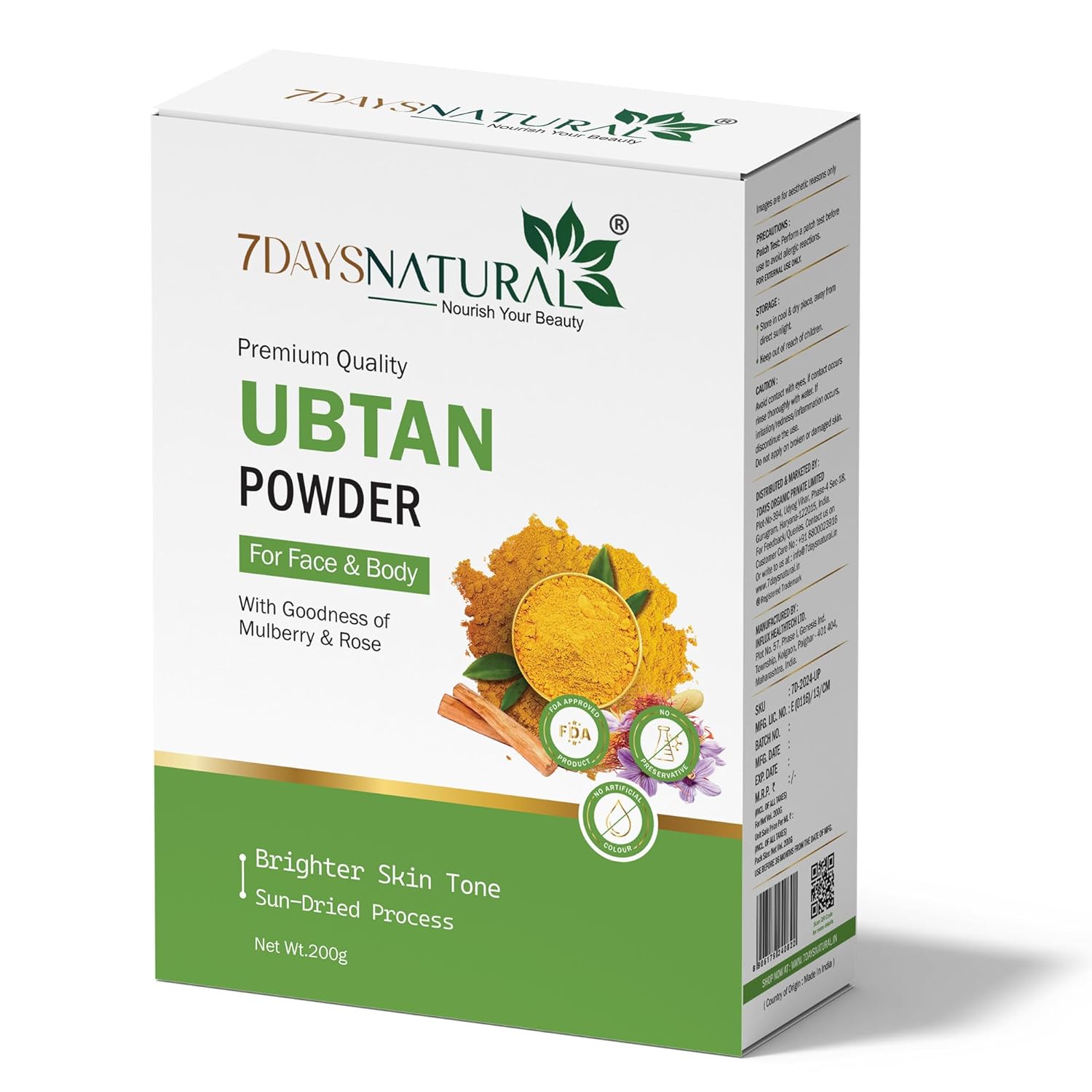
Gentle daily d-tan with Turmeric, Orange Peel, Rose & Mulberry.
The Science Behind the Sacred – Why Ubtan Actually Works
Now, let’s address the skeptic in the room. Is ubtan actually effective, or is this just nostalgia dressed up as skincare?
The answer, backed by modern research, is emphatically yes. Let’s break down the key ingredients and what science has discovered about them.
Turmeric (Haldi) – The Golden Healer
Ancient belief: Turmeric purifies the blood, brings a bridal glow, and protects from negative energy.
Modern science:
- Curcumin, the active compound in turmeric, has powerful anti-inflammatory properties—comparable to some over-the-counter anti-inflammatory drugs
- Antimicrobial activity against a wide range of bacteria, fungi, and viruses
- Antioxidant effects that neutralize free radicals, reducing signs of aging
- Skin brightening: Curcumin inhibits melanin production, helping to fade dark spots and even skin tone
- Wound healing: Speeds up the healing process and reduces scarring
What this means for your skin: Turmeric reduces redness and inflammation (great for acne), fights bacteria (prevents breakouts), and over time, can fade dark spots and hyperpigmentation.
⚠️ Note: Turmeric can temporarily stain fair skin yellow. This fades within hours. For very fair skin, use a smaller amount or combine with yogurt (the lactic acid helps prevent staining).
Sandalwood (Chandan) – The Cooling Calmer
Ancient belief: Sandalwood cools the mind, soothes the skin, and opens the heart to beauty.
Modern science:
- Anti-inflammatory: Reduces skin irritation, redness, and swelling
- Astringent properties: Helps tighten pores and control oil production
- Soothing for sensitive skin: Calms conditions like eczema, psoriasis, and rosacea
- Aromatherapeutic: Sandalwood’s fragrance has been shown to reduce anxiety and promote mental clarity
What this means for your skin: Sandalwood is ideal for sensitive or irritated skin. It calms breakouts, tightens pores, and makes the ritual itself a calming sensory experience.
Chickpea Flour (Besan) – The Gentle Exfoliator
Ancient belief: Besan removes excess oil, softens skin, and prepares the face for other adornments.
Modern science:
- Gentle exfoliation: The fine granules remove dead skin cells without causing micro-tears (unlike harsh walnut or apricot scrubs)
- Absorbs excess oil: Perfect for oily and combination skin types
- Rich in protein and zinc: Nourishes skin and supports collagen production
- Brightening effect: Regular use reveals fresher, brighter skin underneath
What this means for your skin: Besan is the perfect daily exfoliant—effective but never harsh. It’s why grandmothers warned against using “scrubs from the market” that could damage young skin.
Neem – The Antibacterial Warrior
Ancient belief: Neem chases away impurities and keeps the skin clear.
Modern science:
- Powerful antibacterial activity: Effective against P. acnes, the bacteria responsible for acne
- Antifungal properties: Helps with dandruff and fungal skin infections
- Anti-inflammatory: Reduces acne redness and swelling
- Detoxifying: Supports skin’s natural detoxification processes
What this means for your skin: Neem is a game-changer for acne-prone skin. It fights the bacteria that cause breakouts while calming existing inflammation.
Rose (Gulab) – The Heart Opener
Ancient belief: Rose cools the heart, opens beauty, and brings joy.
Modern science:
- Rich in antioxidants: Protects skin from environmental damage
- Natural toner: Rose water balances skin’s pH
- Anti-inflammatory: Reduces redness and irritation
- Mood-enhancing: Rose’s fragrance has been shown to reduce anxiety and elevate mood
What this means for your skin: Rose water is the perfect base for ubtan, it hydrates, tones, and transforms the application into an aromatherapeutic experience.
Ideal for dry skin
Yogurt (Dahi) – The Probiotic Powerhouse
Ancient belief: Yogurt softens the skin and adds a natural glow.
Modern science:
- Lactic acid: A gentle alpha-hydroxy acid (AHA) that exfoliates without irritation
- Probiotics: Support the skin’s natural microbiome, strengthening its barrier function
- Hydrating: Milk proteins and fats nourish and moisturize
- Brightening: Regular use reveals smoother, more radiant skin
What this means for your skin: Yogurt is the secret to the “bridal glow.” It gently exfoliates, hydrates, and supports healthy skin bacteria.
Honey – The Humectant Healer
Ancient belief: Honey seals in beauty and heals imperfections.
Modern science:
- Natural humectant: Draws moisture into the skin
- Antibacterial: Effective against a wide range of bacteria
- Wound healing: Speeds up healing of acne lesions and minor wounds
- Enzymatic exfoliation: Contains enzymes that gently dissolve dead skin cells
What this means for your skin: Honey is perfect for dry or mature skin. It hydrates, heals, and adds a natural, dewy glow.
The Synergy – Why the Combination Works Better
Here’s what the beauty industry doesn’t want you to know: the whole is greater than the sum of its parts.
When you combine these ingredients:
- Turmeric + besan: The besan helps distribute turmeric evenly without staining
- Sandalwood + rose: Both are cooling, creating a powerfully soothing effect
- Yogurt + honey: The lactic acid and enzymes work together for gentle exfoliation
- Neem + turmeric: Double antibacterial action against acne
No single ingredient in an expensive serum can replicate this synergy.
🧪 SCIENCE-BASED BEAUTY: Authentic ubtan combines ingredients that modern research validates. Shop lab-tested ubtan products on Amazon →
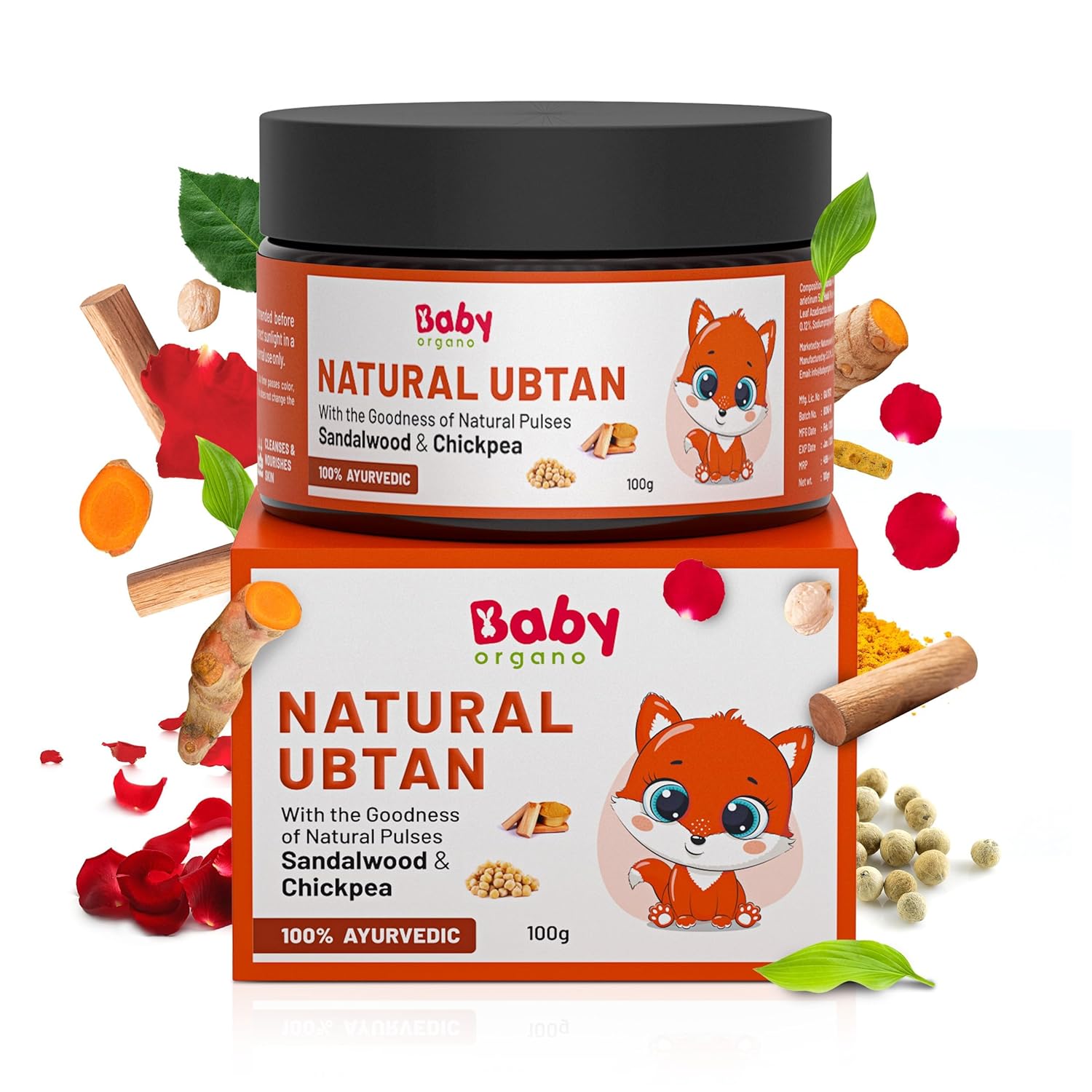
Made with Sandalwood & Chickpea
Traditional Ubtan Recipes – From Grandmother’s Kitchen
Now for the heart of this guide: the recipes themselves. These have been passed down through generations. They vary by family, by region, by skin type. I’ve collected them from grandmothers, aunts, and family cookbooks. Use them as a starting point, then adjust based on what your skin tells you.
3.1 The Classic Bridal Ubtan (Haldi Ceremony Special)
Spiritual significance: Prepared with “sankalp” (intention) by married women. Each ingredient is added with a silent blessing.
Ingredients:
- 4 tablespoons besan (chickpea flour)
- 1 teaspoon turmeric powder (freshly ground if possible)
- 2 teaspoons sandalwood powder
- 1 tablespoon malai (milk cream) – the richer, the better
- Rose water (enough to form a paste)
- A few strands of saffron (soaked in 1 tablespoon milk for 10 minutes)
How to make:
- Soak saffron strands in warm milk for 10 minutes until the milk turns golden
- In a brass or glass bowl, mix besan, turmeric, and sandalwood
- Add malai and the saffron-infused milk
- Slowly add rose water while mixing until you achieve a thick, spreadable paste (like pancake batter)
How to use:
- Apply to face, neck, arms, and legs
- Leave for 20-30 minutes (or until it begins to crack)
- Gently scrub in circular motions while rinsing with lukewarm water
- Follow with a light moisturizer
Frequency: Daily for 2 weeks before a wedding; once weekly for general glow
👰♀️ BRIDAL ESSENTIALS: The Vicco Turmeric WSO Shaadi Pack is a ready-made version of this traditional recipe, formulated with gold dust and turmeric. Shop on Amazon →
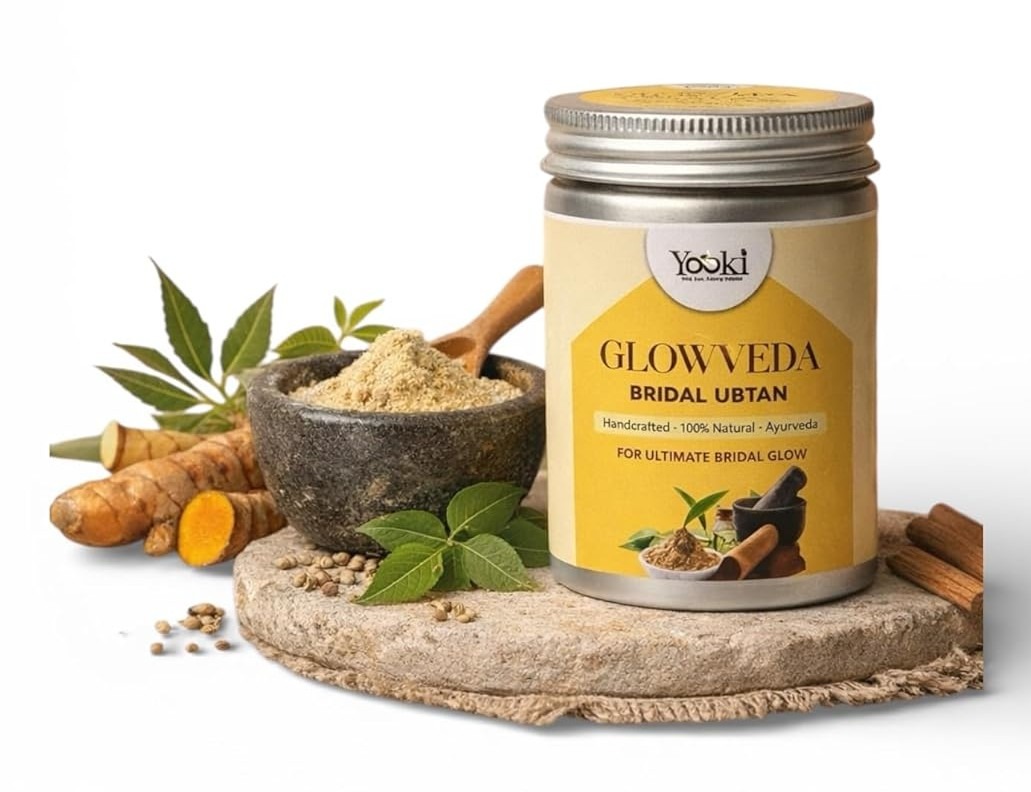
Brightens, Removes Tan & Evens Skin for Pre-Wedding Radiance.
3.2 Daily Glow Ubtan for Normal Skin
Ingredients:
- 2 tablespoons besan
- A pinch of turmeric (literally a pinch—too much will stain)
- 1 tablespoon rose water
- 1 tablespoon plain yogurt (dahi)
- 1 teaspoon honey
How to make:
Mix all ingredients into a smooth paste.
How to use:
Apply to clean face. Leave for 10-15 minutes. Rinse with cool water.
Frequency: 3-4 times per week
Best for: Normal to combination skin
✨ DAILY RADIANCE: The Blue Nectar Turmeric Ubtan Face Pack Powder offers a ready-to-use version of daily glow recipe. Shop on Amazon →
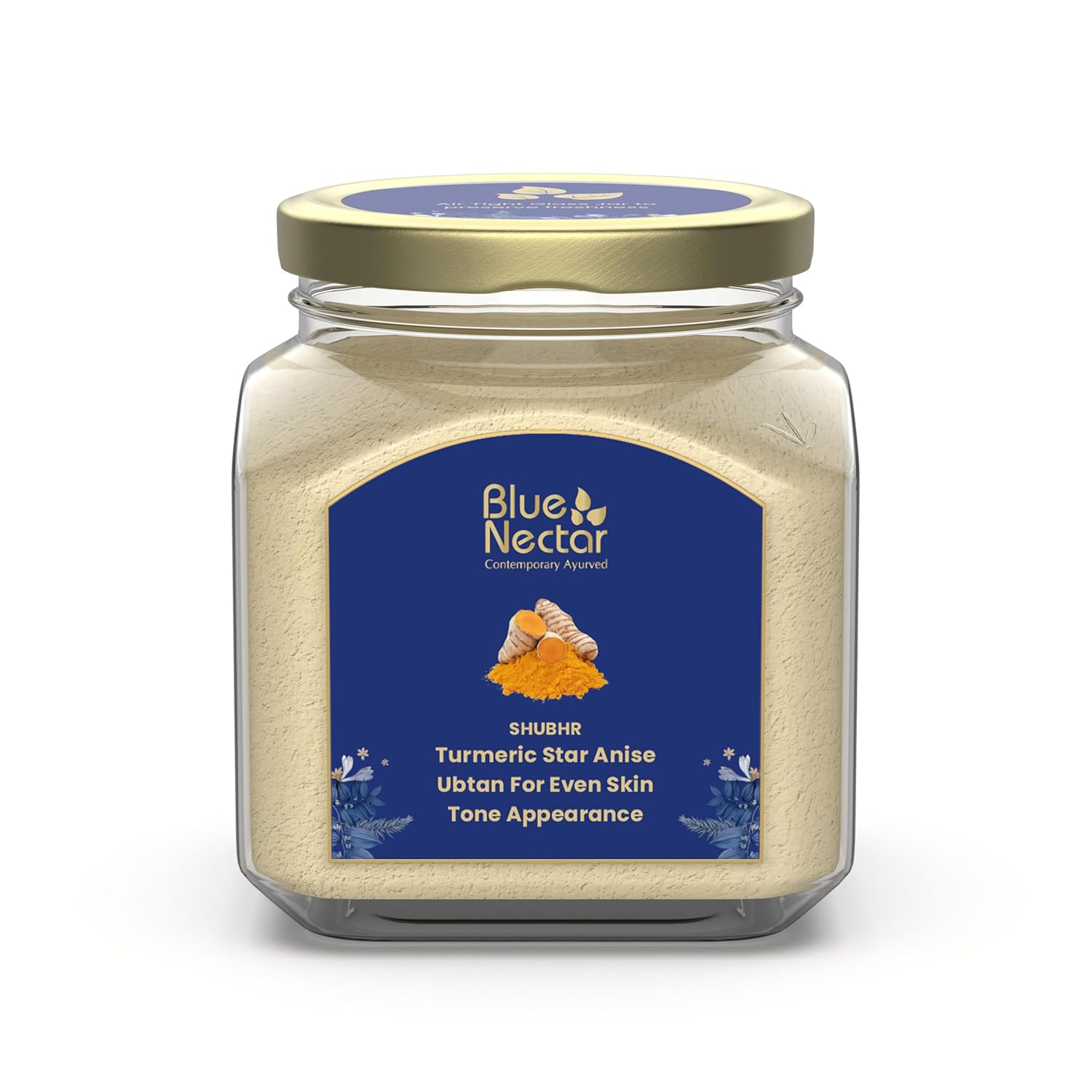
Multani Mitti with Ayurvedic Herbs
3.3 Ubtan for Oily/Acne-Prone Skin
Ingredients:
- 2 tablespoons besan
- 1 tablespoon multani mitti (Fuller’s Earth)
- 1 teaspoon neem powder
- 1 teaspoon turmeric powder
- Rose water (enough to form paste)
- 2 drops tea tree oil (optional, for severe acne)
How to make:
Mix dry ingredients first. Add rose water slowly. Add tea tree oil if using.
How to use:
Apply to clean face. Focus on T-zone and areas prone to breakouts. Leave for 10-15 minutes (do not let it dry completely – multani mitti can over-dry). Rinse with cool water.
Frequency: 3-4 times per week
Best for: Oily, combination, and acne-prone skin
🌿 ACNE SOLUTION: The LUSHR Ubtan Powder combines besan, turmeric, and neem for acne-prone skin. Shop on Amazon →
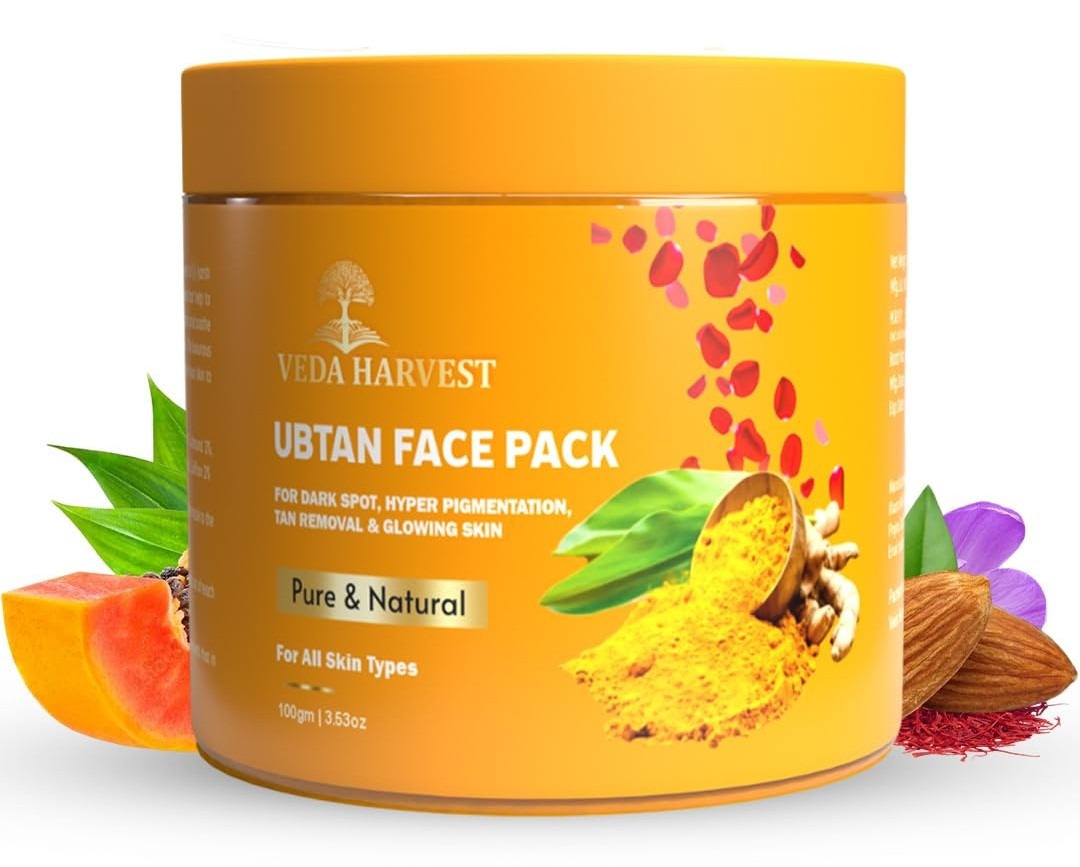
For Glowing Skin, Hyperpigmentation, Dark Spots, Acne Control
3.4 Ubtan for Dry/Sensitive Skin
Ingredients:
- 2 tablespoons oat flour (grind rolled oats in a mixer)
- 1 teaspoon sandalwood powder
- 1 tablespoon aloe vera gel (fresh from plant if possible)
- 1 tablespoon malai (milk cream) or thick yogurt
- 1 teaspoon honey
How to make:
Oat flour is gentler than besan. Mix all ingredients into a creamy paste.
How to use:
Apply to clean face. Leave for 10 minutes only (sensitive skin doesn’t need long). Rinse with lukewarm water. Pat dry—never rub.
Frequency: 1-2 times per week
Best for: Dry, sensitive, or mature skin
🌸 GENTLE CARE: The Forest Essentials Ubtan Face Pack is luxurious enough for sensitive skin, with saffron, sandalwood, and turmeric. Shop on forestessentialsindia →
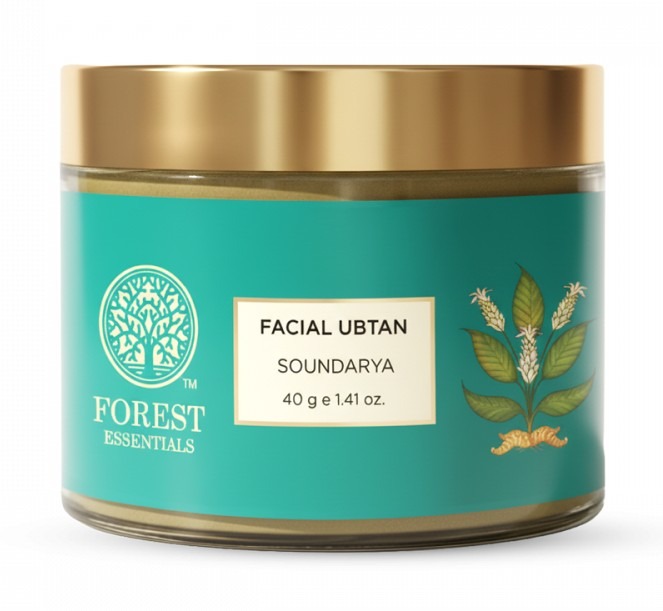
Prevents premature fine lines, refines texture
3.5 Body Ubtan – The Full Body Exfoliation Ritual
Ingredients:
- 1 cup besan
- 2 tablespoons turmeric powder
- 2 tablespoons orange peel powder (dried and ground)
- 1/2 cup yogurt
- Rose water or milk (enough to form thick paste)
How to make:
Mix dry ingredients. Add yogurt. Slowly add liquid until you have a thick, spreadable paste—thicker than face ubtan.
How to use:
- Before your bath, apply to damp skin
- Start from neck and work down to feet
- Leave for 10-15 minutes
- Scrub gently in circular motions while rinsing
- Focus on elbows, knees, and heels
Frequency: 2 times per week
Benefits: Exfoliates dead skin, prevents ingrown hairs, brightens uneven areas, leaves whole body soft and glowing
🧴 FULL BODY GLOW: The The Forest Herbs Natural Care Full Body Ubtan can be used on both face and body. Shop on Amazon →
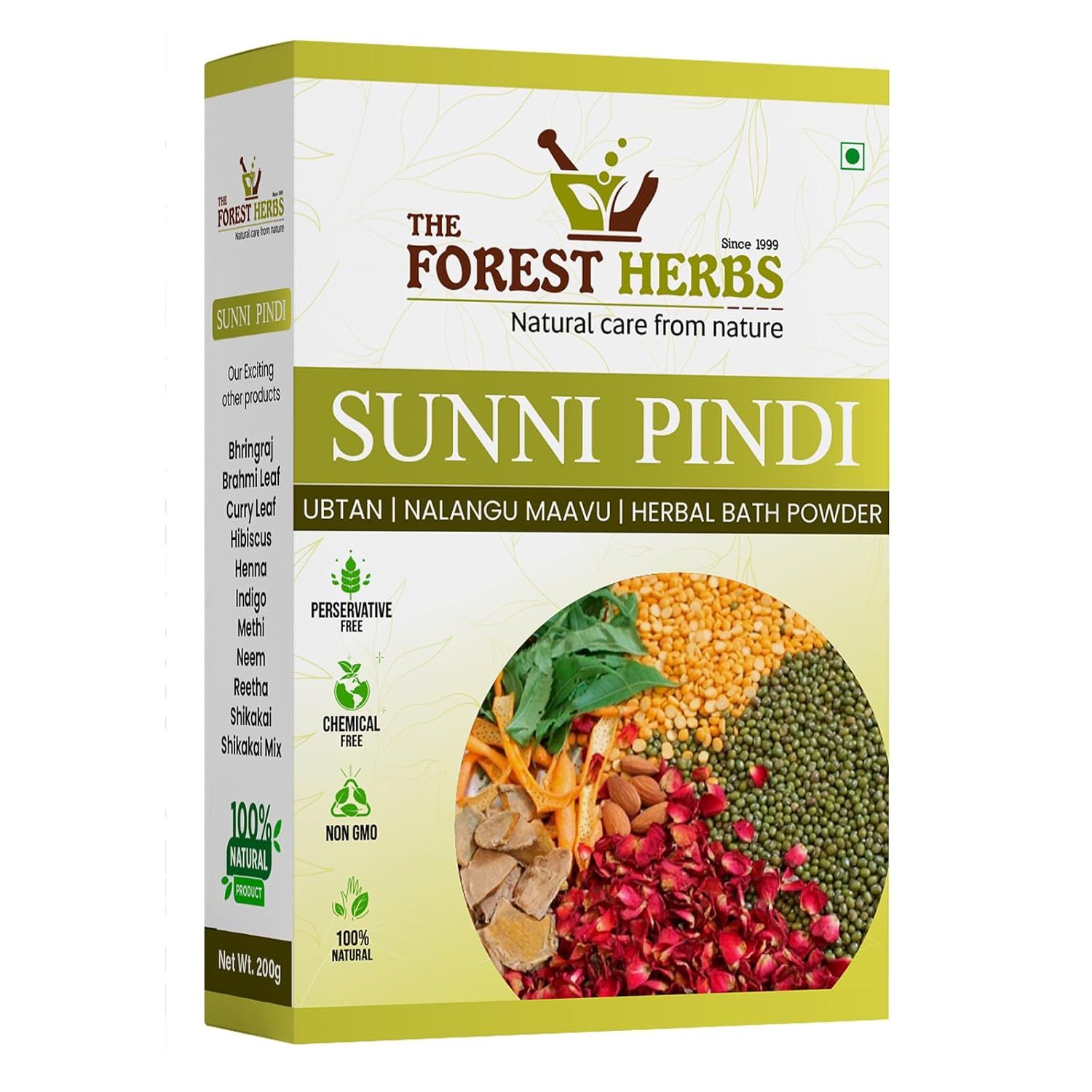
For glowing skin naturally.
3.6 The “No-Fuss” Modern Ubtan – Ready-Made Mixes
For days when you need the ritual but don’t have time to mix:
What to look for in a store-bought ubtan:
- No parabens, sulfates, or artificial fragrances
- Traditional ingredients listed prominently (besan, turmeric, sandalwood)
- Transparent ingredient list (not hidden behind “proprietary blend”)
- Brand with Ayurvedic credentials
What to avoid:
- “Ubtan” products that are just colored soap
- Artificial yellow color (should come from real turmeric)
- Added microplastics or beads (besan is the exfoliant)
- Overwhelming artificial fragrance
🏆 TOP PICK: The Kama Ayurveda Ubtan – 100% Natural contains vetiver, sandalwood, rose, and turmeric—no chemicals, just the traditional recipe. Shop on Amazon →
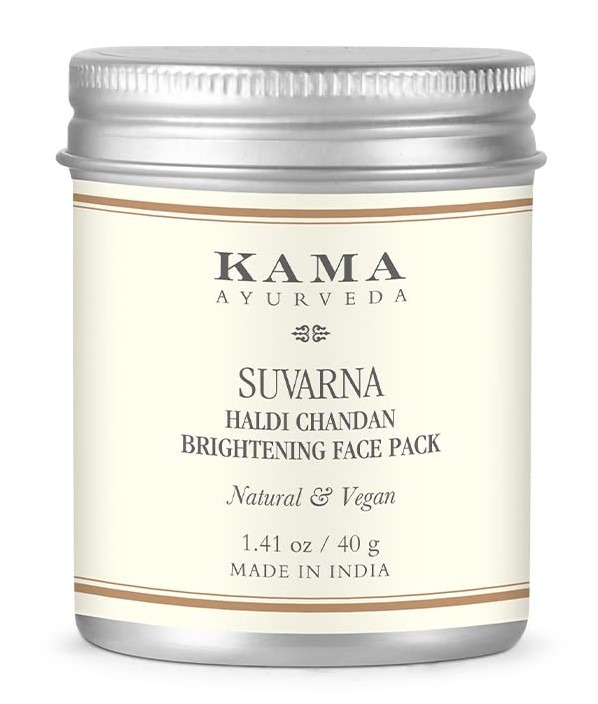
Haldi Chandan Brightening PAck
How to Use Ubtan – The Mindful Ritual
Buying or making ubtan is only half the journey. The other half is how you use it. This isn’t a five-second face wash. This is a ritual. Treat it as such.
Step 1: Preparation – Creating Sacred Space
Before you touch a single ingredient:
- Cleanse your face with plain water (no soap yet)
- Set an intention: “I prepare my skin to receive nourishment.” “I honor the women who came before me.” “I release the dullness of yesterday.”
- Gather your tools: A brass or glass bowl (never metal—Ayurveda says metal reduces effectiveness), a wooden spoon, your ingredients
- Create ambiance: Light a candle, play soft music, or simply sit in silence
Step 2: Mixing – The Act of Creation
- Measure your dry ingredients into the bowl
- Add wet ingredients slowly
- Mix with your fingers if possible—the warmth of your hands activates the ingredients (and it’s more intimate than a spoon)
- Observe the color and texture: It should be golden, smooth, and spreadable
Affirmation as you mix: “With every stir, I blend ancient wisdom with my own intention.”
Step 3: Application – The Blessing
- Use your fingers (never a metal spatula)
- Start from the center of your face and move outward
- Use circular motions as you apply—this isn’t just spreading; it’s massaging
- Avoid the immediate eye area (turmeric can sting if it gets in your eyes)
- Apply to your neck and chest as well—these areas show age too
Affirmation as you apply: “I cover myself in golden light. I am protected. I am beautiful. I am enough.”
Step 4: Waiting – The Meditation
This is the most important, and most frequently skipped – step. Do not scroll through your phone. Do not rush to finish chores.
Instead:
- Close your eyes
- Take 10 deep breaths (inhale for 4 counts, hold for 4, exhale for 6)
- Feel the ubtan drying on your skin—notice the sensation without judgment
- If your mind wanders, gently bring it back to the feeling of the mask
- Stay for 10-15 minutes (set a gentle timer if needed)
Pro tip: This is the perfect time for a short meditation, gratitude practice, or simply sitting in silence—something we rarely allow ourselves.
Step 5: Removal – The Release
- Dampen your fingers with lukewarm water
- Begin scrubbing gently in circular motions—this is where the exfoliation happens
- Focus on areas with dead skin (nose, chin, forehead)
- Rinse with cool water (this seals the pores)
- Pat dry with a soft, clean towel (never rub)
Affirmation as you rinse: “I wash away what no longer serves me. I reveal the fresh skin beneath.”
Step 6: Aftercare – Sealing the Glow
- Apply a natural moisturizer while skin is still slightly damp (coconut oil, aloe vera, or your favorite face cream)
- Massage gently in upward strokes
- Observe your skin in the mirror—notice the glow without criticism
Affirmation after care: “I am grateful for this body that carries me. I will treat it with kindness today.”
Frequency Guidelines
| Skin Type | Recommended Frequency |
|---|---|
| Oily/Acne-prone | 3-4 times per week |
| Normal | 2-3 times per week |
| Dry/Sensitive | 1-2 times per week |
| Bridal prep | Daily for 2 weeks before wedding |
⏰ MAKE TIME FOR RITUAL: The HerbtoniQ Ubtan Powder Combo is perfect for busy mornings when you still want the ritual. Apply, shower, rinse – 15 minutes total. Shop on Amazon →
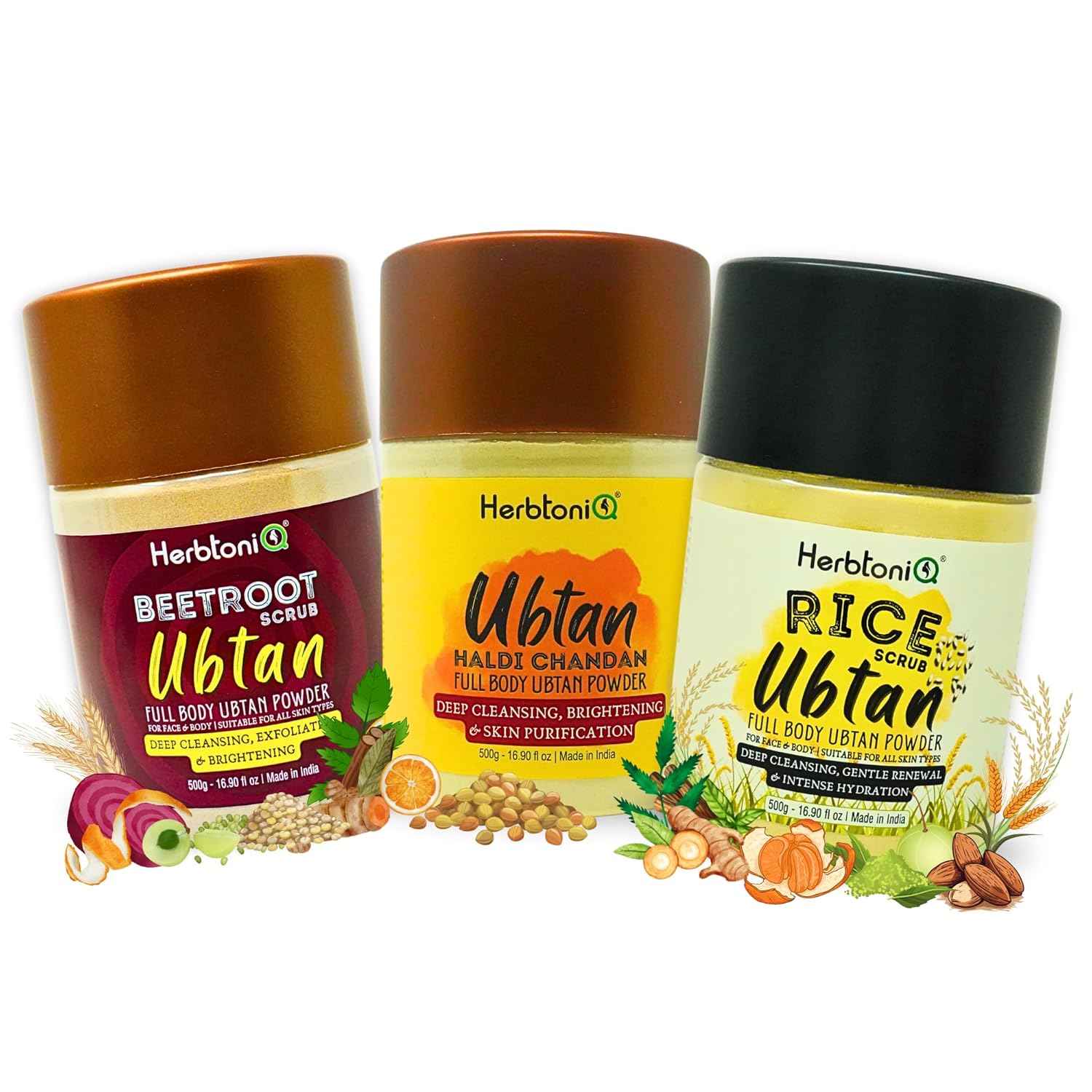
Three Variants in One Pack: 500 g each of Beetroot Scrub Ubtan, Classic Ubtan, and Rice Scrub Ubtan.
👰♀️ Ubtan for Brides – The Sacred Pre-Wedding Ritual
The Haldi Ceremony – More Than a Tradition
The Haldi ceremony (also called Pithi, Uptan, or Tel Baan) is one of the most joyful pre-wedding rituals across India. The bride (and often groom) is anointed with a turmeric-based paste by married women of the family .
The ritual:
- Women gather around the bride
- Each takes a bit of ubtan on her fingers
- Each applies it to the bride’s face, arms, legs, and feet
- Each offers a silent blessing—for fertility, for happiness, for protection
- There is laughter, music, sometimes tears
The deeper meaning:
The bride is in a liminal state—between her old life and her new one. She is vulnerable. The ubtan is not just beautifying; it is protective. The turmeric wards off the “evil eye” and negative energies. The blessings of the women create a shield of love around her.
One bride reflected: “I thought the Haldi ceremony was just for photos. But when my grandmother—who has Alzheimer’s and doesn’t always recognize me—took ubtan on her trembling fingers and placed it on my forehead, she said clearly: ‘Be happy, my child.’ She was present. She was blessing me. I will never forget that moment.”
Bridal Ubtan Timeline
| Time Before Wedding | Ubtan Routine |
|---|---|
| 4 weeks before | Start daily face ubtan (the classic bridal recipe) |
| 2 weeks before | Full body ubtan 3 times per week |
| 1 week before | Daily full body ubtan |
| Day before Haldi | Final intense session (add extra saffron and malai) |
| Haldi ceremony morning | Light application for the ritual (the married women will do this) |
Sample Bridal Ubtan Recipe (Extra Potent)
Ingredients:
- 1/2 cup besan
- 2 tablespoons turmeric (freshly ground if possible)
- 2 tablespoons sandalwood powder
- 10-12 strands saffron (soaked in 2 tablespoons warm milk for 30 minutes)
- 2 tablespoons malai (the thickest cream from full-fat milk)
- Rose water
- 1 tablespoon honey
Why this recipe works: The saffron is expensive but worth it, it’s the ultimate Ayurvedic skin brightener. The extra malai ensures deep hydration. The honey adds healing properties.
💍 BRIDAL MUST-HAVE: The Forest Essentials Sandalwood & Fresh Turmeric Body Polisher, the ultimate bridal luxury. Shop on Amazon→
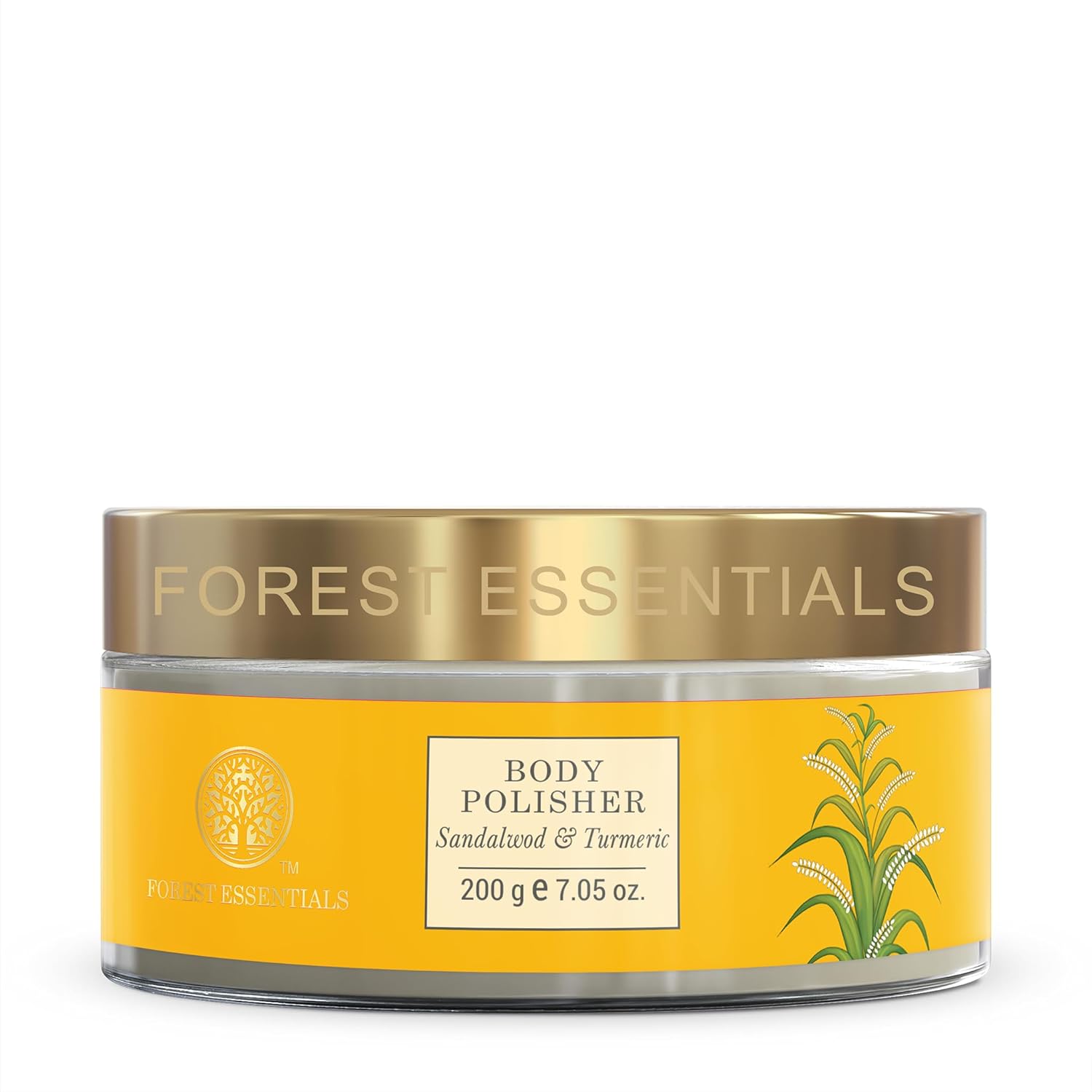
For skin brightening.
Ubtan for Body – The Full Skin Rejuvenation
Most people think of ubtan as a face treatment. But your body deserves the same attention.
Body Ubtan Recipe
Ingredients:
- 1 cup besan
- 2 tablespoons turmeric
- 2 tablespoons orange peel powder (dried and ground)
- 1/2 cup yogurt
- Rose water or milk (to adjust consistency)
How to use in the shower:
- Wet your body completely
- Apply the ubtan paste from neck to feet
- Pay special attention to elbows, knees, ankles, and heels
- Leave for 5-10 minutes (use this time to shampoo your hair)
- Scrub gently in circular motions
- Rinse thoroughly
- Pat dry and apply moisturizer
Benefits of body ubtan:
- Exfoliates dead skin: Reveals smoother, brighter skin all over
- Reduces body acne (bacne): Turmeric and neem fight bacteria
- Prevents ingrown hairs: Gentle exfoliation prevents hairs from getting trapped
- Brightens dark areas: Elbows, knees, underarms, and inner thighs
- Softens rough patches: Heels, elbows, and knees become noticeably softer
- Prepares skin for waxing/shaving: Reduces ingrown hairs and irritation
Frequency: 2 times per week
🛁 FULL BODY GLOW: The Anuved Utane (Ubtan) Natural Scrub Soap offers the benefits of ubtan in a convenient bar, perfect for daily body use. Shop on Amazon →
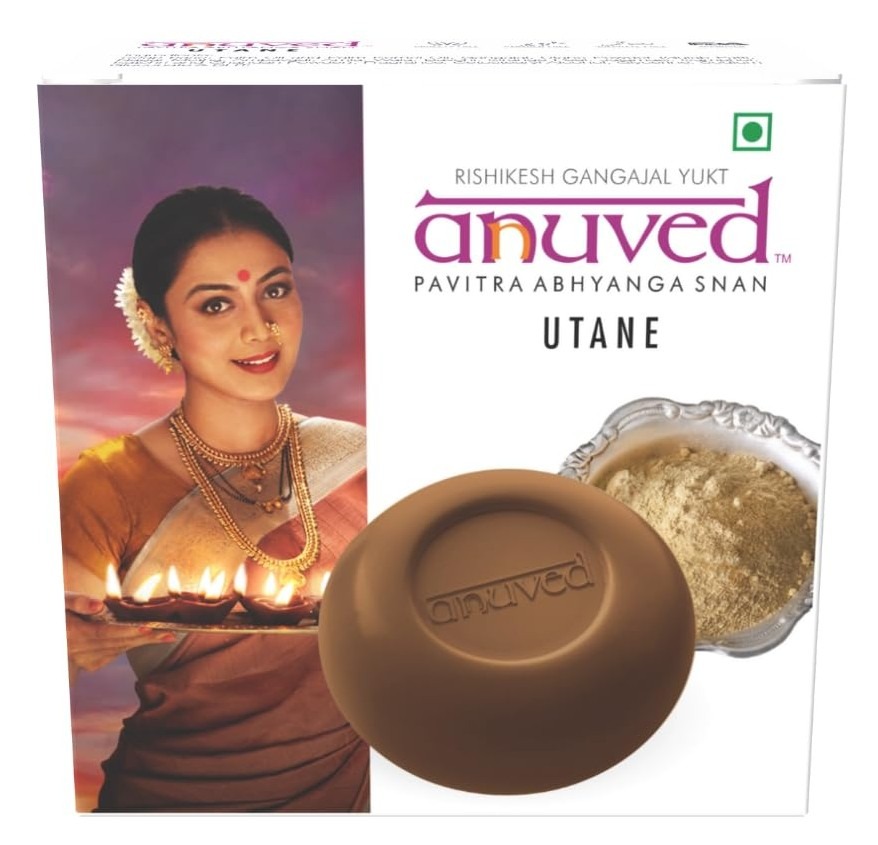
Gently removes tan, revealing your skin’s natural radiance.
Ubtan for Different Skin Concerns – Customizing Your Mix
One of the beauties of homemade ubtan is that you can customize it for your specific skin concerns.
| Skin Concern | Add These Ingredients | Avoid |
|---|---|---|
| Acne/Pimples | Neem powder, tea tree oil (1 drop), lemon juice | Heavy creams (malai) |
| Pigmentation/Dark spots | Sandalwood, saffron, lemon juice, tomato juice | – |
| Dull skin | Orange peel powder, yogurt, honey, coffee powder | – |
| Dryness | Malai, honey, aloe vera, ripe banana | Multani mitti, lemon |
| Oily skin | Multani mitti, lemon juice, rose water, tea tree oil | Heavy oils, malai |
| Tan removal | Tomato juice, lemon juice, yogurt, orange peel powder | – |
| Aging/Wrinkles | Saffron, sandalwood, honey, aloe vera, ripe papaya | Harsh exfoliants |
| Open pores | Multani mitti, sandalwood, rose water | – |
Quick Customization Guide
For acne: Start with the oily skin recipe, add 1 teaspoon neem powder and 1 drop tea tree oil.
For pigmentation: Start with the classic bridal recipe, add 1 teaspoon sandalwood and the juice of 1/2 lemon.
For dull skin: Add 1 tablespoon orange peel powder and 1 teaspoon honey to the daily glow recipe.
For aging skin: Add a few strands of saffron (soaked in milk) and 1 teaspoon honey.
🎨 CUSTOMIZE YOUR CARE: The SatyaaVeda Ubtan Face Fack is a neutral base you can enhance with your own additions. Shop on Amazon →
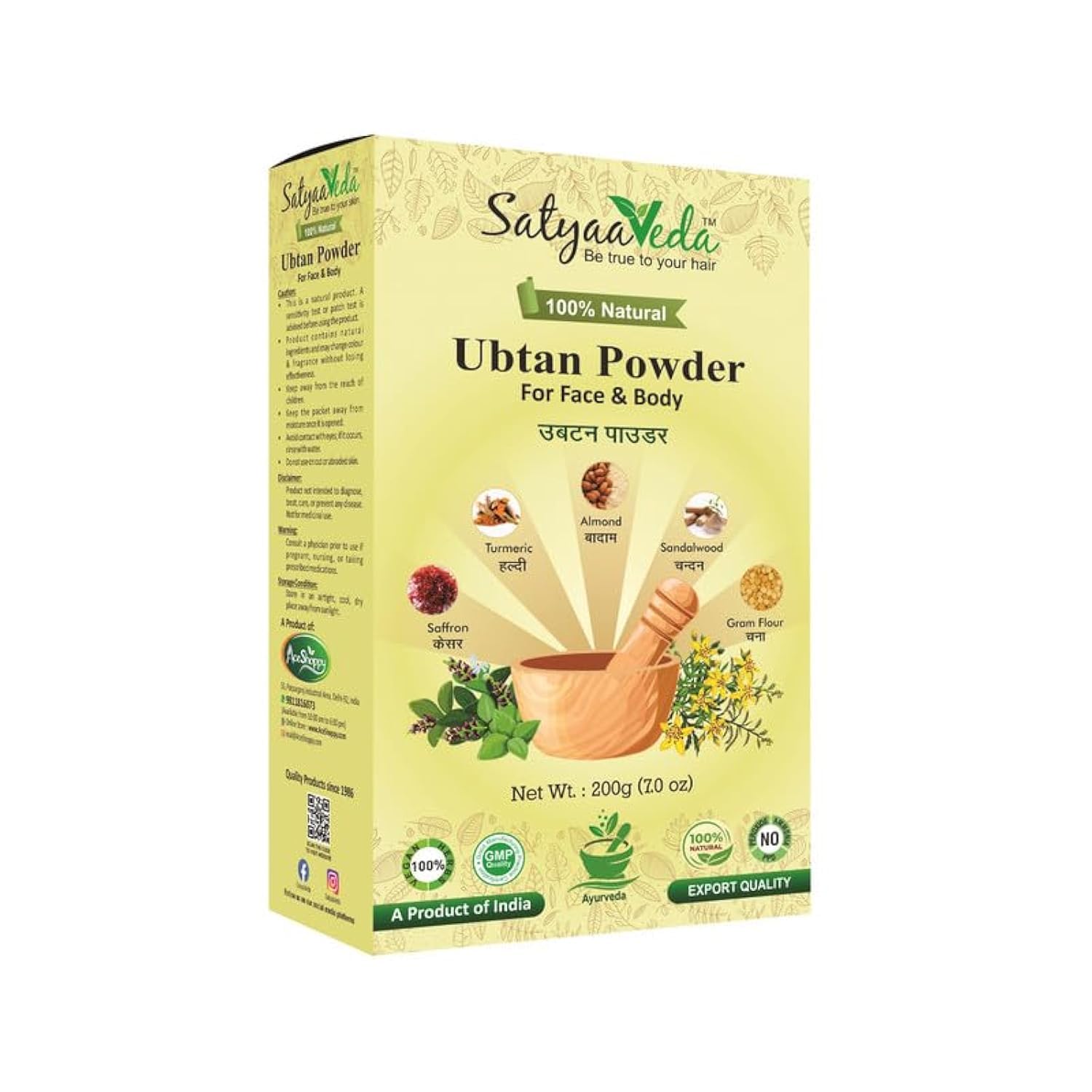
Ayurvedic Blend for Healthy Skin.
Common Ubtan Mistakes – And How to Avoid Them
Even the best recipe can go wrong. Here are the most common mistakes—and how to fix them.
Mistake 1: Using Too Much Turmeric
The problem: Your face looks like you lost a fight with a curry.
The fix: Use a pinch of turmeric, not a spoonful. For very fair skin, use even less—or substitute with saffron (which brightens without staining).
If you overdid it: The stain fades within hours. You can speed it up by wiping with yogurt or milk.
Mistake 2: Applying on Wet Face
The problem: The ubtan slides right off and never dries properly.
The fix: Start with a clean, dry face. The ubtan needs to adhere to dry skin to work.
Mistake 3: Leaving It On Too Long
The problem: The mask becomes rock-hard, over-dries your skin, and is painful to remove.
The fix: 10-15 minutes is plenty. Set a timer. If your skin feels tight, you’ve left it too long.
Mistake 4: Scrubbing Too Hard
The problem: Red, irritated, raw skin—the opposite of glowing.
The fix: Gentle circular motions. The besan exfoliates naturally; you don’t need to “scrub.” Think of it as massaging, not sanding.
Mistake 5: Using a Metal Bowl or Spoon
The problem: Ayurveda says metal reduces the effectiveness of natural ingredients.
The fix: Use brass, glass, or ceramic bowls. Wooden spoons are ideal. Avoid steel, iron, or aluminum.
Mistake 6: Expecting Overnight Results
The problem: Disappointment. Quitting after one use.
The fix: Ubtan works gradually, like any good skincare. You’ll notice softness immediately. Real glow takes 2-3 weeks of consistent use. Trust the process.
Mistake 7: Using the Same Recipe Year-Round
The problem: Your skin’s needs change with seasons—your ubtan should too.
The fix:
- Summer: More sandalwood and rose (cooling)
- Winter: More malai and honey (hydrating)
- Monsoon: More neem and multani mitti (oil-absorbing)
Mistake 8: Not Patching Testing
The problem: A full-face reaction to an ingredient your skin hates.
The fix: Always patch test a new ubtan on your inner arm before applying to your face.
🛠️ TOOLS FOR THE RITUAL: A glass mixing bowl and wooden face mask brush elevate the experience and honor the tradition. Shop ritual tools on Amazon →
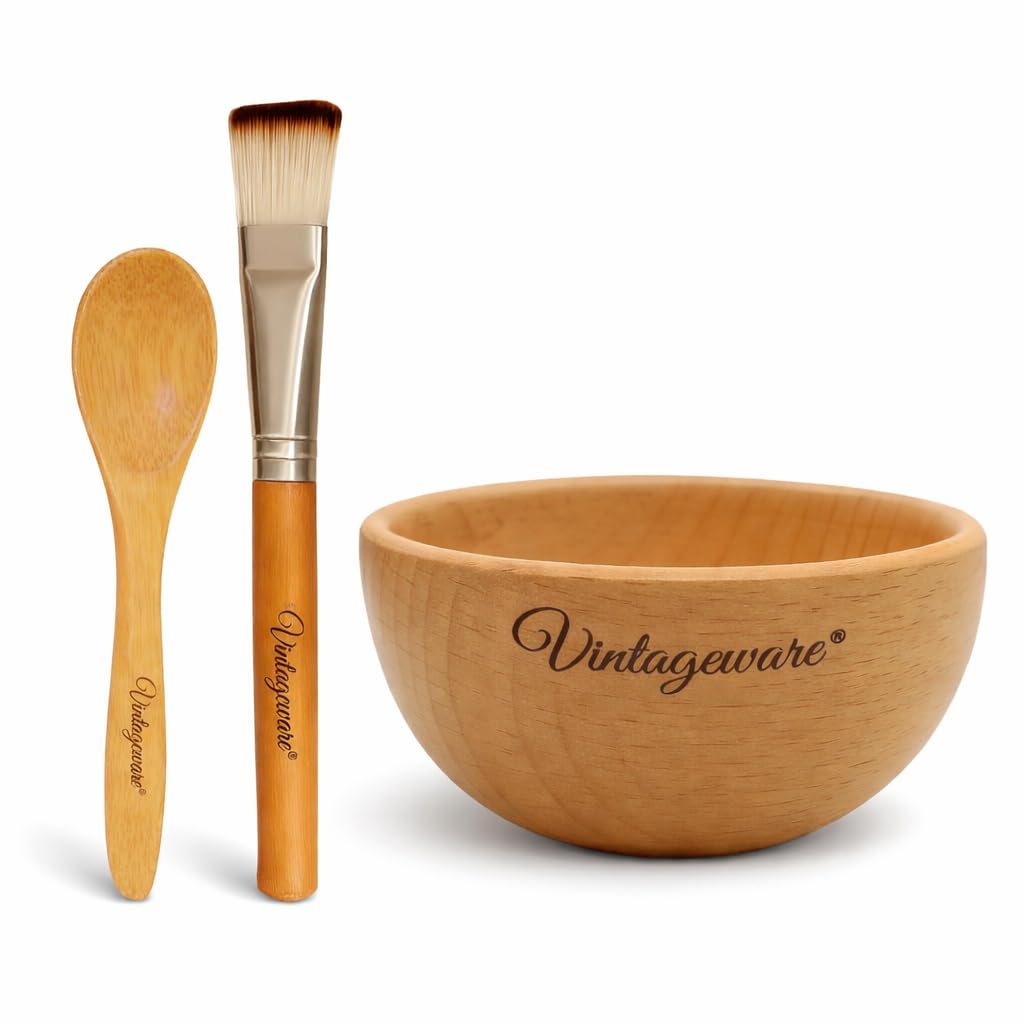
Mixing Bowl, Spoon & Brush for DIY Facial Masks.
Homemade vs. Store-Bought Ubtan – Which Is Right for You?
Both have their place. Here’s an honest comparison.
| Factor | Homemade Ubtan | Store-Bought Ubtan |
|---|---|---|
| Control over ingredients | Complete | Limited to product formula |
| Freshness | Maximum (use immediately) | Preservatives added |
| Convenience | Requires time & effort | Ready to use |
| Cost per use | Very low (pennies) | Higher (₹10-50 per use) |
| Customization | Endless possibilities | None |
| Shelf life | 1-2 days (wet) / months (dry mix) | Months to years |
| Travel-friendly | No (wet) / Yes (dry mix) | Yes |
| Ritual experience | Deepest (you made it yourself) | Moderate |
| Consistency | Varies each time | Always the same |
| Ingredient quality | You control it | Depends on brand |
The Best of Both Worlds
Keep both:
- A dry homemade mix in a glass jar for weekends (just add liquid when needed)
- A trusted store-bought option for busy mornings or travel
How to Store Homemade Ubtan
Dry mix (besan + turmeric + sandalwood + neem powder):
- Store in an airtight glass jar
- Keep in a cool, dark cupboard
- Lasts 3-6 months
Wet mix (with yogurt, honey, or malai):
- Must be used immediately
- Do not store—the dairy will spoil
📦 STORAGE SOLUTION: The Borosil Glass Jar Set keeps your dry ubtan mix fresh for months. Shop on Amazon →
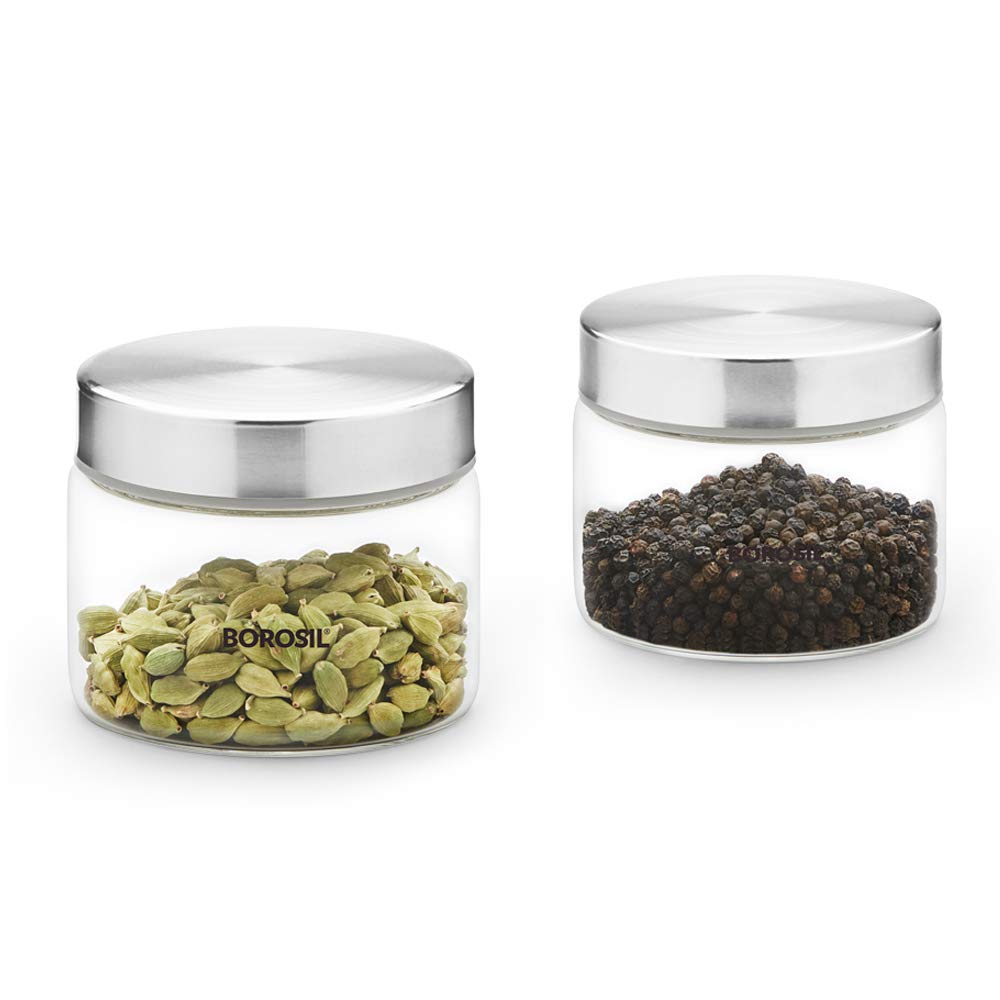
AIR-TIGHT, STAINLESS STEEL LIDS
Frequently Asked Questions
Q1: Can ubtan whiten skin?
A: Ubtan doesn’t “whiten” skin—it brightens it. By exfoliating dead skin cells and improving circulation, it reveals your natural, healthy skin tone. The glow is real; the “fairness” marketing is misleading. Your grandmother never promised to change your skin color—only to make it radiant.
Q2: Is ubtan safe for daily use?
A: Depends on your skin type.
- Oily skin: 3-4 times per week is fine
- Normal skin: 2-3 times per week
- Dry/sensitive skin: 1-2 times per week
Daily use can over-exfoliate, especially for dry or sensitive skin.
Q3: Can ubtan remove facial hair?
A: No. Ubtan is for exfoliation and nourishment, not hair removal. Some believe regular use weakens hair over time, but this isn’t scientifically proven. For hair removal, use traditional methods (threading, waxing) or modern alternatives.
Q4: Is ubtan safe during pregnancy?
A: Generally yes, but with precautions:
- Avoid essential oils (tea tree, etc.) unless cleared by your doctor
- Some women avoid turmeric in large amounts during early pregnancy (consult your doctor)
- The traditional bridal ubtan is actually encouraged during the Haldi ceremony, but that’s usually third trimester
- Always consult your doctor before starting any new skincare routine during pregnancy
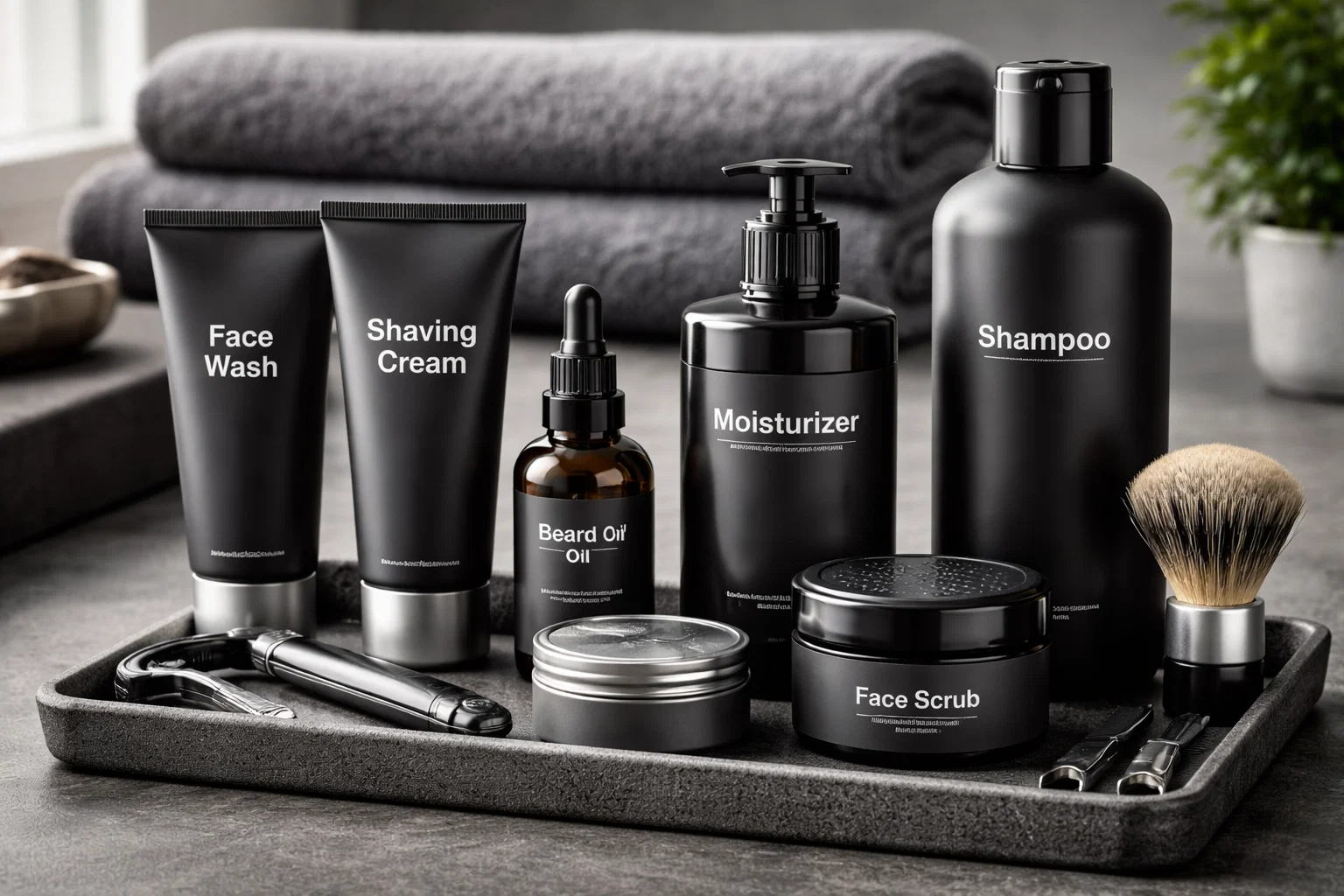
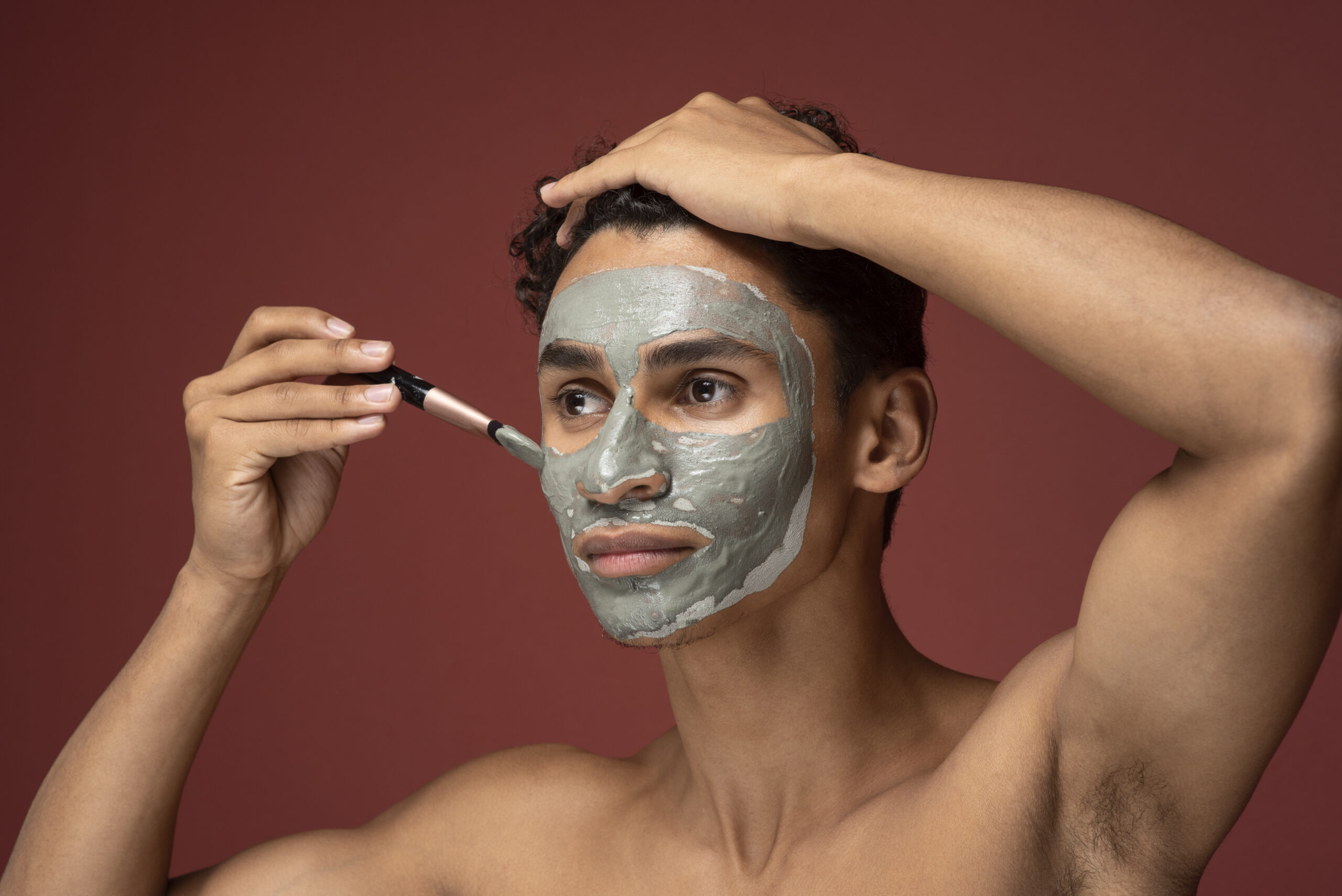
Q5: Can men use ubtan?
A: Absolutely. Ubtan is for everyone. Men can use it as:
- A face pack (especially before shaving, it softens the beard)
- A body scrub (great for back acne)
- A pre-shave exfoliant (prevents ingrown hairs)
Q6: How long does ubtan take to show results?
A:
- Immediately: Softness and smoothness
- After 1 week: Reduced dullness, slight glow
- After 2-3 weeks: Noticeable brightening, even tone
- After 4+ weeks: Maximum benefits with consistent use
Consistency is key. One application won’t transform your skin.
Q7: Is ubtan good for acne-prone skin?
A: Yes, especially ubtan with neem, turmeric, and multani mitti. Avoid heavy ingredients like malai (milk cream) and honey (can be sticky and trap bacteria). The classic oily skin recipe (besan + multani mitti + neem + turmeric + rose water) is excellent for acne.
Q8: Can I use ubtan on my underarms?
A: Yes! Ubtan is excellent for underarms:
- Brightens dark underarms
- Prevents ingrown hairs after shaving/waxing
- Reduces odor (turmeric and neem are antibacterial)
- Use the body ubtan recipe 2-3 times per week
Q9: What’s the difference between ubtan and multani mitti?
A:
- Multani mitti (Fuller’s Earth) is a single ingredient—a clay that absorbs oil.
- Ubtan is a blend of multiple ingredients (besan, turmeric, sandalwood, etc.), sometimes including multani mitti.
Both are valuable, but ubtan is more comprehensive.
Q10: Where can I buy authentic ubtan ingredients online?
A: All of these platforms offer high-quality ingredients and ready-made ubtan:
| Platform | Best For |
|---|---|
| Amazon | Wide selection, competitive prices |
| Nykaa | Premium Ayurvedic brands |
| Ajio | Fashion-forward natural brands |
| Brand sites | Forest Essentials, Kama Ayurveda, Just Herbs |
Conclusion – Bring the Ritual Home
Here’s the truth, and it’s worth sitting with. Ubtan is not just a face pack. It is a conversation with your grandmother. A whisper of ancient wisdom that says: you are worthy of care, of ritual, of slowing down.
It is a connection to the women who came before you, the ones who mixed besan in brass bowls, who sang as they applied turmeric to brides’ faces, who understood that beauty is not about fixing flaws but about honoring the sacred vessel that carries you through this life.
Whether you mix besan from your kitchen or open a jar from Forest Essentials, the intention behind the act matters more than the ingredients. So tomorrow morning, before your shower, take 10 minutes.
Mix. With your fingers, in a glass bowl, thinking of the women who did this before you.
Apply. In circular motions, from the center of your face outward, like you’re blessing yourself.
Wait. Close your eyes. Breathe. Let the golden paste dry on your skin as you sit in silence—something we rarely allow ourselves.
Rinse. With cool water, watching the yellow swirl down the drain, taking with it the dullness of yesterday.
And remember. You are not just “doing skincare.” You are continuing a tradition that has honored women for thousands of years.
Your grandmother’s glow is waiting. Bring it home.
Disclaimer: This article contains affiliate links. If you purchase through these links, we may earn a commission at no extra cost to you. All products are independently selected and reviewed based on quality, ingredients, and alignment with Ayurvedic principles. Prices are approximate and may vary by seller and over time. Always patch test new products and consult a doctor before starting any new skincare routine, especially during pregnancy.