The Sacred Truth About Your Hair That Nobody Told You
Let’s start with a question that might surprise you. When was the last time you treated your hair as sacred? Not as a problem to be fixed. Not as something to be tamed, straightened, or hidden. But as sacred – worthy of ritual, intention, and the most exquisite adornments.
In ancient India, your grandmothers and their grandmothers understood something we’ve largely forgotten: hair care accessories for women were never just about looking good. They were about honoring the divine feminine energy (Shakti) that flows through every strand.
The tradition of Kesh Shringar, the art of hair adornment, dates back to around 2000 BC. It was considered one of the essential sixteen adornments (Solah Shringar) that a woman would complete daily, not out of vanity, but out of reverence for her own being.
Every comb, every pin, every flower tucked behind the ear carried meaning. Every stroke of the wooden comb was a prayer. Every accessory was a talisman—for protection, for prosperity, for love.
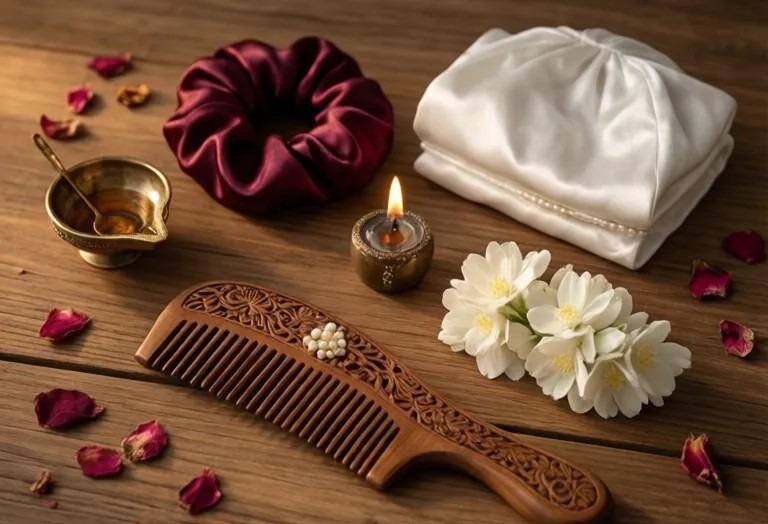
And here’s the beautiful truth that bridges ancient wisdom with modern life. The same sacred energy lives in today’s silk scrunchie, in your wooden comb, in the gentle embrace of your satin bonnet, if you choose them with intention.
So put aside the guilt about “wasting time” on your hair. Set aside the rush that turns grooming into a chore. And let me walk you through the rich, sacred world of hair care accessories for women, from the ancient rituals of Kesh Shringar to the mindful modern tools that can transform your daily routine into a spiritual practice. Because your hair is your crown. And it’s time you treated it that way.
🕉️ BEGIN YOUR SACRED RITUAL: The journey to mindful hair care starts with the right tools. Explore the curated collection of spiritual hair care accessories for women, from neem wood combs to silk scrunchies. [Shop the Sacred Hair Collection →]
Discover the importance of face masks in your daily beauty routine here.
Kesh Shringar – The Ancient Art of Hair Adornment
What is Kesh Shringar?
Long before “self-care” became a buzzword, Indian women practiced Kesh Shringar—the sacred art of dressing and adorning hair. It wasn’t a chore to be rushed through. It was a daily ritual of self-honoring .
The term “Shringar” itself means to make beautiful, to adorn, to decorate. But in the spiritual context of the Solah Shringar (the sixteen adornments of a woman), Kesh Shringar held a special place. The sixteen adornments included:
| Adornment | Significance |
|---|---|
| Hairstyle (Keshapasharachana) | The foundation of beauty |
| Maang Teeka | Marks the Ajna Chakra (third eye) |
| Sindoor | Symbol of marriage and completeness |
| Bindi | Sacred mark, religious significance |
| Karnphool (Earrings) | Adorns the ears, frame the face |
| Nath (Nose ring) | Worn on left nostril, supported by a chain |
| Haar & Mangalsutra | Necklaces symbolizing union |
| Bajuband (Armlet) | Wards off evil eye |
| Choodiyan (Bangles) | Wishes for husband’s long life |
| Kamarbandh (Waistband) | Enhances saree, represents prosperity |
| Payal & Bichuas | Anklets and toe rings, marital symbols |
| Mehendi | Love and affection between couple |
| Anjana (Kajal) | Enhances beauty of the eyes |
| Itar (Perfume) | Keeps bride fresh and fragrant |
| Bridal Outfit | Foundation of the adornment |
Within this sacred sixteen, the hair received special attention because hair was believed to be the physical manifestation of a woman’s life force, her creativity, her intuition.
The Hidden Meanings Behind Hair Adornments
The Maang Teeka and the Third Eye
The maang teeka—that exquisite pendant resting in the parting of your hair—isn’t just decorative. It sits precisely on the Ajna Chakra, the third eye, the center of intuition and spiritual awareness .
In South Indian tradition, this is called the naethi chutti or netri chutti, and it’s believed to “protect the bride from evil eyes and negative energy” . The pendant acts as a spiritual anchor, keeping the wearer grounded and connected to her inner wisdom.
The Jadanagam – Serpent of Divine Energy
The jadanagam is a gold head ornament worn over the braid, shaped like a serpent’s hood . This isn’t just an aesthetic choice. The serpent represents Kundalini energy—the coiled divine feminine power that rests at the base of the spine. When a woman wears the jadanagam, she’s symbolically awakening that energy, inviting wisdom, transformation, and spiritual power into her life .
Surya Pirai and Chandra Pirai – The Sun and Moon
Along with the netri chutti, some brides wear the Surya pirai (moon-shaped) and Chandra pirai (sun-shaped) ornaments . These represent the balance of masculine and feminine energies, the cosmic dance of day and night, and the completeness of the divine feminine who contains all opposites within herself.
The Gajra – Fragrant Blessings
The humble gajra, a string of fresh jasmine flowers woven into the hair—carries perhaps the most accessible spiritual energy. Jasmine is not just beautiful; it has Ayurvedic therapeutic qualities—calming the mind, uplifting the spirit, reducing stress. When you wear a gajra, you’re not just smelling good. You’re engaging in aromatherapy, wrapping your aura in the vibration of purity and devotion.
🌺 BRING THE RITUAL HOME: You don’t need a wedding to wear a gajra. Artificial jasmine gajras are available year-round and carry the same symbolic energy. Shop artificial gajra sets →
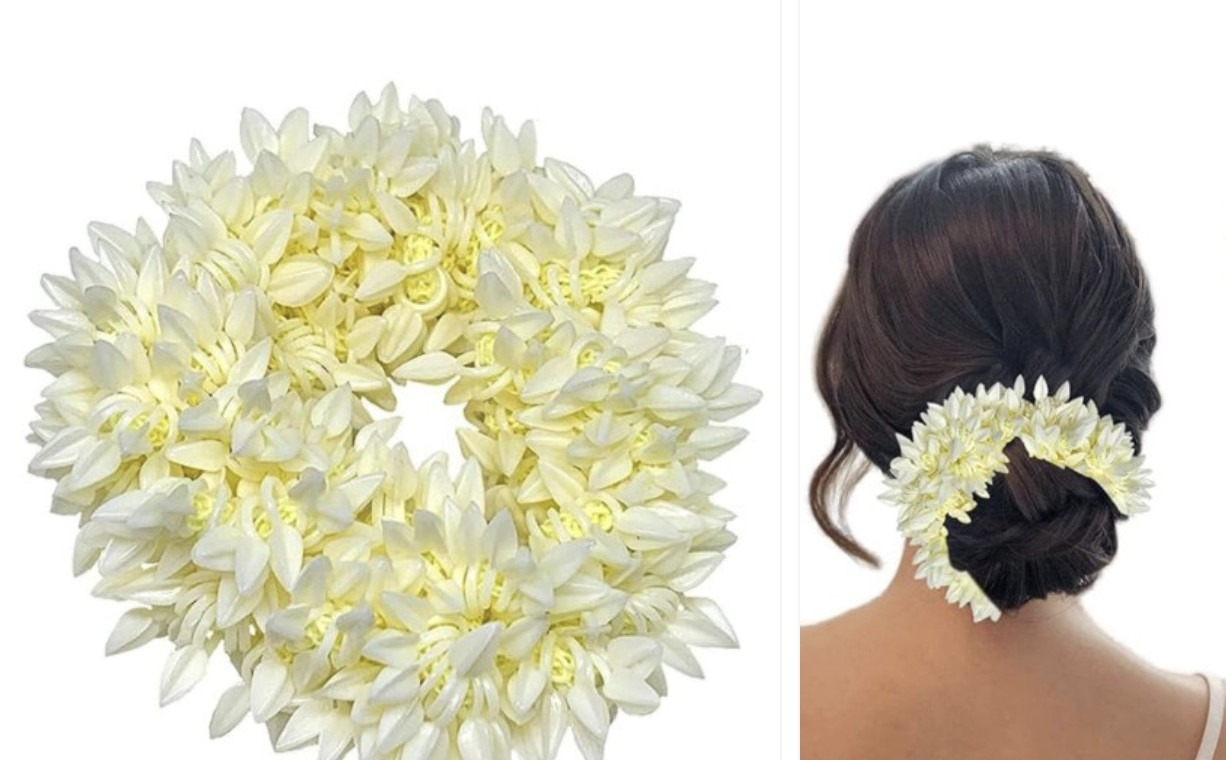
Beautifully crafted artificial jasmine (Mogra) flowers
The Science Behind the Sacred – Why Ancient Wisdom Works
Before we dismiss these traditions as mere superstition, let’s look at what modern science has discovered.
The Kangsi – Ancient Comb, Modern Validation
The Kangsi, the hand-carved wooden comb—is a tradition practiced by Banjara tribes for over 400-500 years . These combs were carved from specific woods: Sheesham, Babool, Kadam, Ker, and Ber—trees “reputed for their health benefits” .
Why wood? Why not plastic?
Here’s what the ancient craftsmen knew and what science now confirms:
| Ancient Belief | Modern Scientific Validation |
|---|---|
| Wooden combs prevent static electricity | Plastic combs create static that lifts the hair cuticle, causing frizz and breakage. Wood is naturally anti-static |
| Wooden combs “do not meddle with neurotransmitters and electricity in the brain” | Static electricity from plastic combs can disrupt the scalp’s natural electromagnetic field |
| Rounded bristles provide a “massaging sensation” and “keep the head cool” | Scalp massage increases blood circulation, reduces cortisol (stress hormone), and promotes hair growth |
| Oil-filled combs allow oil to seep through bristles | Combing with oil ensures even distribution and deeper penetration of nutrients |
| Combing eases labor pains in pregnant women | Scalp massage releases endorphins, natural pain relievers |
One Amazon reviewer of a modern neem wood comb captures this perfectly: “Very soothing and feel happy to comb again and again”. Another shares: “The wooden comb makes your hair stronger and longer. It does not damage the hair even while you brush it hardly” .
The Material Science of Mindful Hair Care
Modern research on hair care accessories for women confirms what ancient traditions always knew: material matters.
| Accessory Material | Ancient Equivalent | Modern Benefit |
|---|---|---|
| Silk | Worn by royalty for its purity | Reduces friction, prevents breakage, retains moisture |
| Bamboo | Sustainable wood | Gentle on scalp, increases blood circulation, sustainable |
| Neem Wood | Sacred Ayurvedic tree | Antibacterial properties, cools the scalp, promotes growth |
| Satin | Silk alternative for commoners | Reduces friction, affordable, accessible |
| Cotton | Worn by all classes | Breathable, gentle, natural |
🌿 AYURVEDIC HAIR CARE: The Nat Habit Kacchi Neem Wooden Comb is pre-soaked in oil and 13 different herbs, distributing healthy oil throughout your scalp with every stroke. “Kacchi herb treated neem wood” ensures you get the full Ayurvedic benefit. Check availability on Amazon →
Traditional Hair Care Accessories for Women – A Spiritual Encyclopedia
Let’s explore the rich world of traditional hair care accessories for women, their spiritual significance, and how they translate to modern life.
3.1 The Kangsi – The Sacred Comb
What it is: A hand-carved wooden comb made from specific sacred woods, with teeth on both sides—wider on one side for detangling, finer on the other for smoothing .
Spiritual Significance:
- In the Muria tribes of Chhattisgarh, boys gift wooden or brass combs to girls of their choice. The status of the girl is enhanced by the number of combs she possesses
- One of the first gifts for a newborn or young bride includes hairbrushes with silk-soft bristles
- The comb represents care, attention, and the sensual pleasure of being groomed
The Ritual of Combing:
“Hair dressing has always been an important part of grooming from time immemorial around the world. In India, hairdressing and ornamentation holds an important place and depicts different cultures, beliefs and even social status” .
The act of combing wasn’t rushed. It was a daily meditation—a time to connect with oneself, to prepare for the day ahead, to honor the body that houses the soul.
Modern Equivalent: Neem wood combs, sandalwood combs, bamboo combs
🪵 BRING HOME THE KANGSI: The INSIME Neem Wooden Comb brings this 400-year-old tradition to your bathroom. Made from young neem wood (Kachi neem), it’s highly durable and naturally antibacterial. Shop now on Amazon →
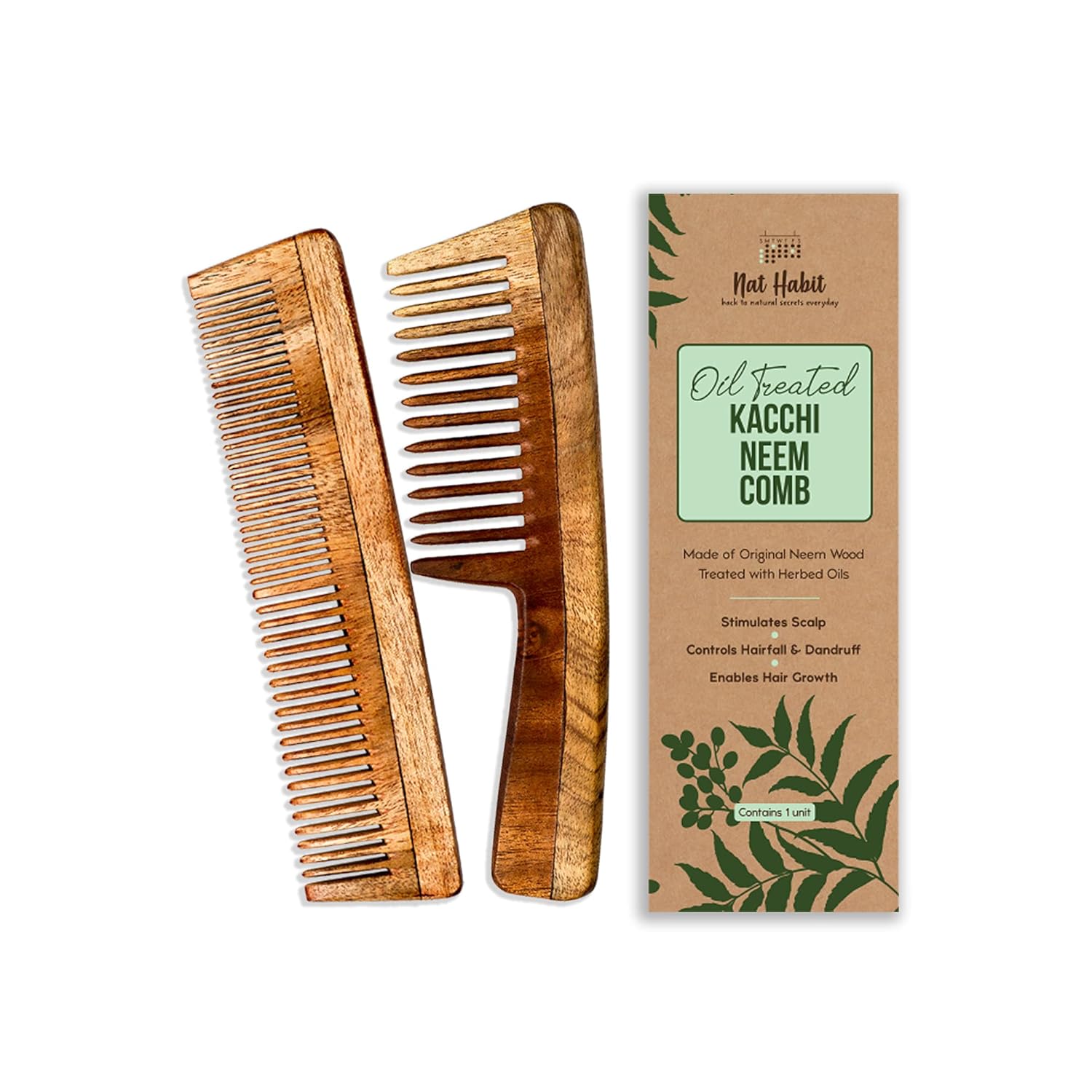
Beautifully crafted artificial jasmine (Mogra) flowers
3.2 The Maang Tikka / Nethi Chutti – The Third Eye Adornment
What it is: A chain worn across the hairline with a pendant resting on the forehead. In South India, it’s called naethi chutti and often includes a hook that attaches to the hair .
Spiritual Significance:
- Sits on the Ajna Chakra (third eye)—the center of intuition, clarity, and spiritual awareness
- “Believed to protect the bride from evil eyes and negative energy”
- Symbolizes the union of two souls (when worn by a bride)
- Brings prosperity, protection, and spiritual balance
The Ritual of Wearing:
The maang tikka is traditionally the last ornament placed before the bride sees her reflection. It’s the crowning touch, the final seal of blessing.
Modern Equivalent: Casual maang tikkas for festivals, minimalist designs for everyday wear, hair chains for braids.
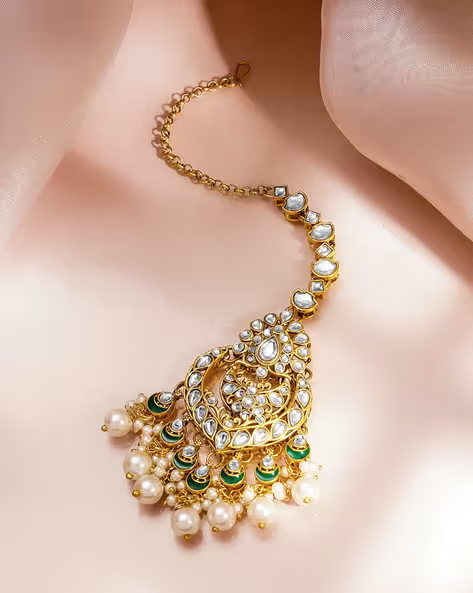
Beautifully crafted traditional fashion jewellery
✨ SACRED ADORNMENT: The Temple Design Gold-Plated Mang Tikka with Lakshmi Motif brings temple jewelry aesthetics to your hair. Featuring Goddess Lakshmi on a lotus, flanked by peacocks. Shop on Amazon →
3.3 The Jadanagam – The Serpent of Kundalini
What it is: A gold head ornament worn over the braid, shaped like a serpent’s hood .
Spiritual Significance:
- Represents Kundalini energy—the coiled divine feminine power
- Symbolizes wisdom and the divine feminine
- Awakens spiritual transformation
- Traditionally passed down as heirloom
The Ritual of Wearing:
The jadanagam is most commonly worn by brides, particularly in South Indian communities. It’s believed to activate the energy channels along the spine, preparing the bride for her new chapter.
Modern Equivalent: Braid chains, serpent hair clips, decorative hair cuffs
🐍 HONOR THE KUNDALINI: While authentic jadanagam requires a jeweler, modern braid chains capture the essence. Shop braid chains on Ajio →
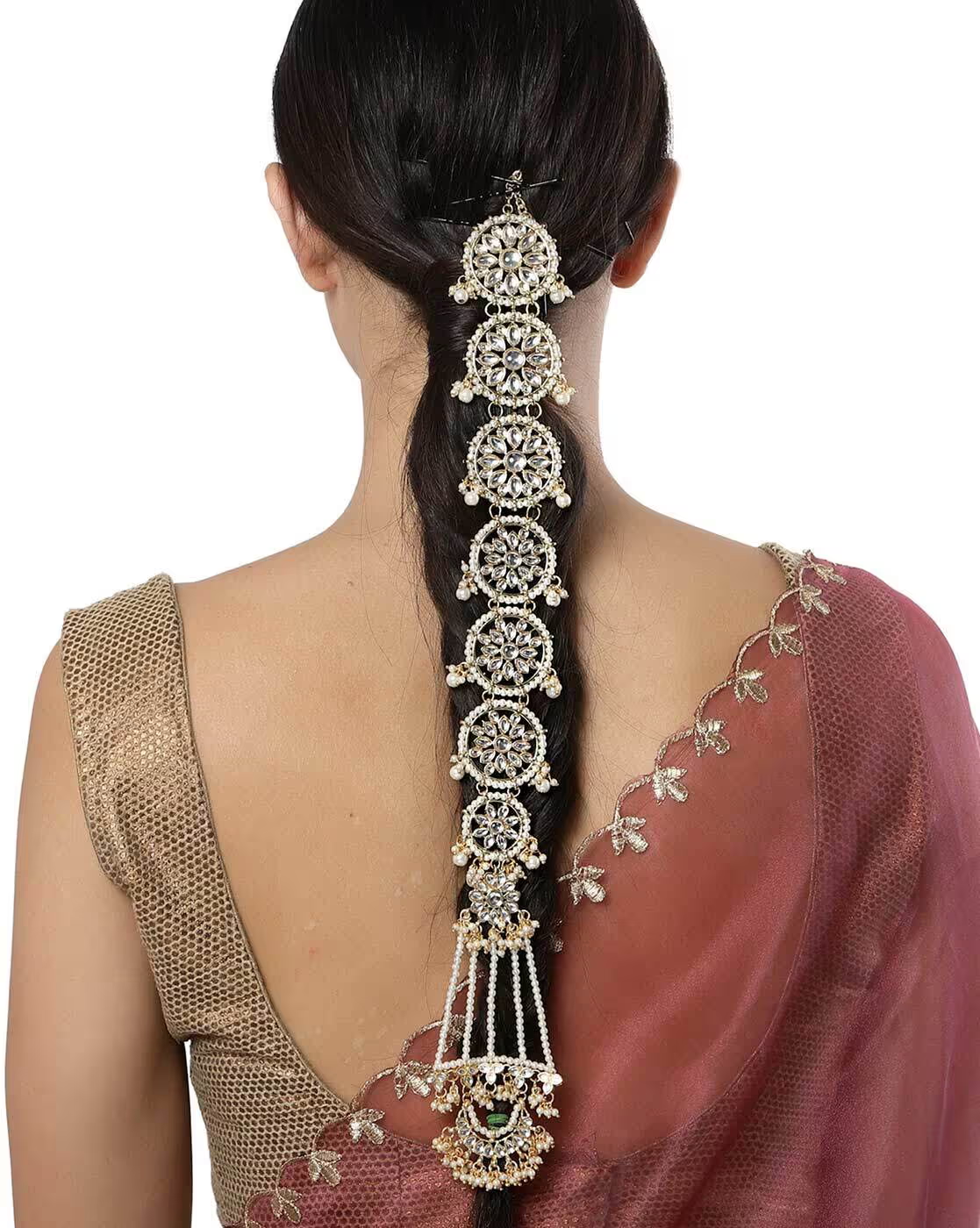
Beautifully crafted jadanagam.
3.4 The Passa / Jhoomar – The Side Sweep
What it is: A fan-shaped ornament clipped into the side of the hair, dangling over the ear.
Spiritual Significance:
- Draws attention to facial expressions and the eyes
- Worn by classical dancers (Bharatanatyam, Kathak) to emphasize storytelling
- Symbolizes beauty, grace, and elegance
- Represents the feminine art of captivating without speaking
Modern Equivalent: Side hair clips, embellished barrettes, pearl hair pins
3.5 The Gajra – The Fragrant Blessing
What it is: A string of flowers (traditionally jasmine) woven into a braid or bun.
Spiritual Significance:
- Symbol of purity, beauty, and sensuality
- Depicted in ancient Indian art (Raja Ravi Varma’s paintings)
- Jasmine has Ayurvedic therapeutic qualities—calming, uplifting, stress-reducing
- Worn during weddings to bring good luck, prosperity, and happiness
The Ritual of Wearing:
The gajra is often the last touch before a woman steps out. Its fragrance lingers, creating an invisible aura of beauty that precedes her.
Modern Equivalent: Artificial gajra, scented hair clips, flower-shaped barrettes
3.6 The Temple Hair Clip – Portable Divinity
What it is: A gold-plated hair clip featuring deities (like Goddess Lakshmi), peacocks, and temple motifs .
Spiritual Significance:
- Brings divine blessings to the wearer
- The peacock symbolizes beauty, grace, and immortality in Indian culture
- Ruby red stones symbolize power and devotion; white stones bring purity and subtle brilliance
- The triple-layer pearl chains represent the three realms (earth, heaven, underworld)
Modern Equivalent: Temple jewelry-inspired hair clips available on various platforms
🏛️ WEAR YOUR BLESSINGS: The Temple Hair Clip features the goddess seated on a lotus, flanked by two majestic peacocks, creating a captivating aura. Perfect for weddings, poojas, and festivals. Shop this heirloom piece →
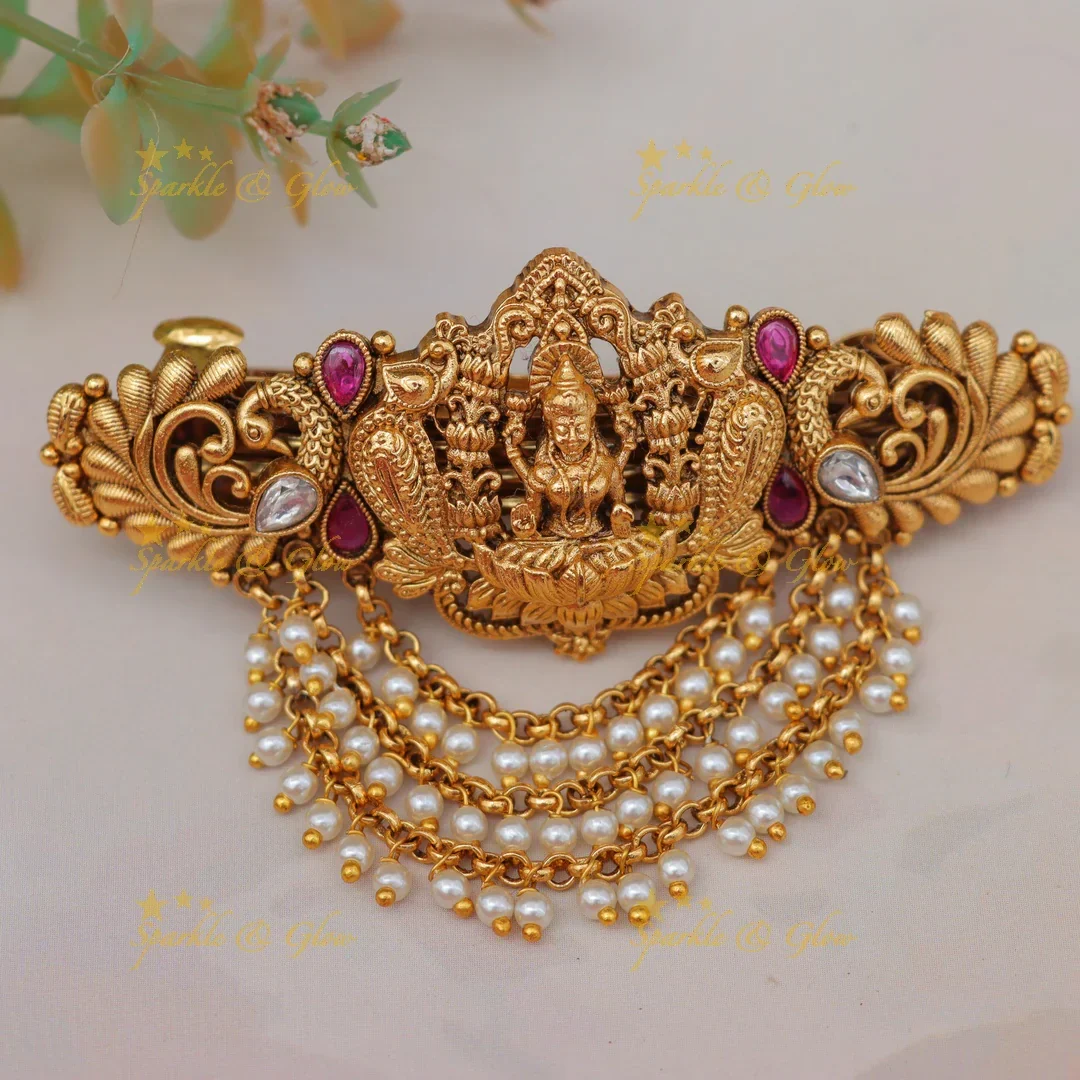
Beautifully crafted hair clip.
Modern Hair Care Accessories for Women – Mindful Selections
Now, let’s bridge the ancient and the modern. Here’s how today’s hair care accessories for women carry the same sacred energy—if chosen with intention.
4.1 Silk Scrunchies – The Modern Gajra
Ancient Connection: The gajra honored hair with fragrance and beauty. Silk scrunchies honor hair with gentleness and protection.
Spiritual Significance:
- Silk is the material of royalty and purity
- The soft embrace of silk represents non-violence (ahimsa) toward your hair
- Choosing silk over elastic is an act of self-compassion
Why They Work: Unlike cotton or elastic bands that strip moisture and create friction, silk scrunchies:
- Reduce breakage and frizz
- Preserve hairstyles overnight
- Don’t leave creases
🕉️ TEMPLE-BLESSED SILK: Shop these sacred scrunchies →
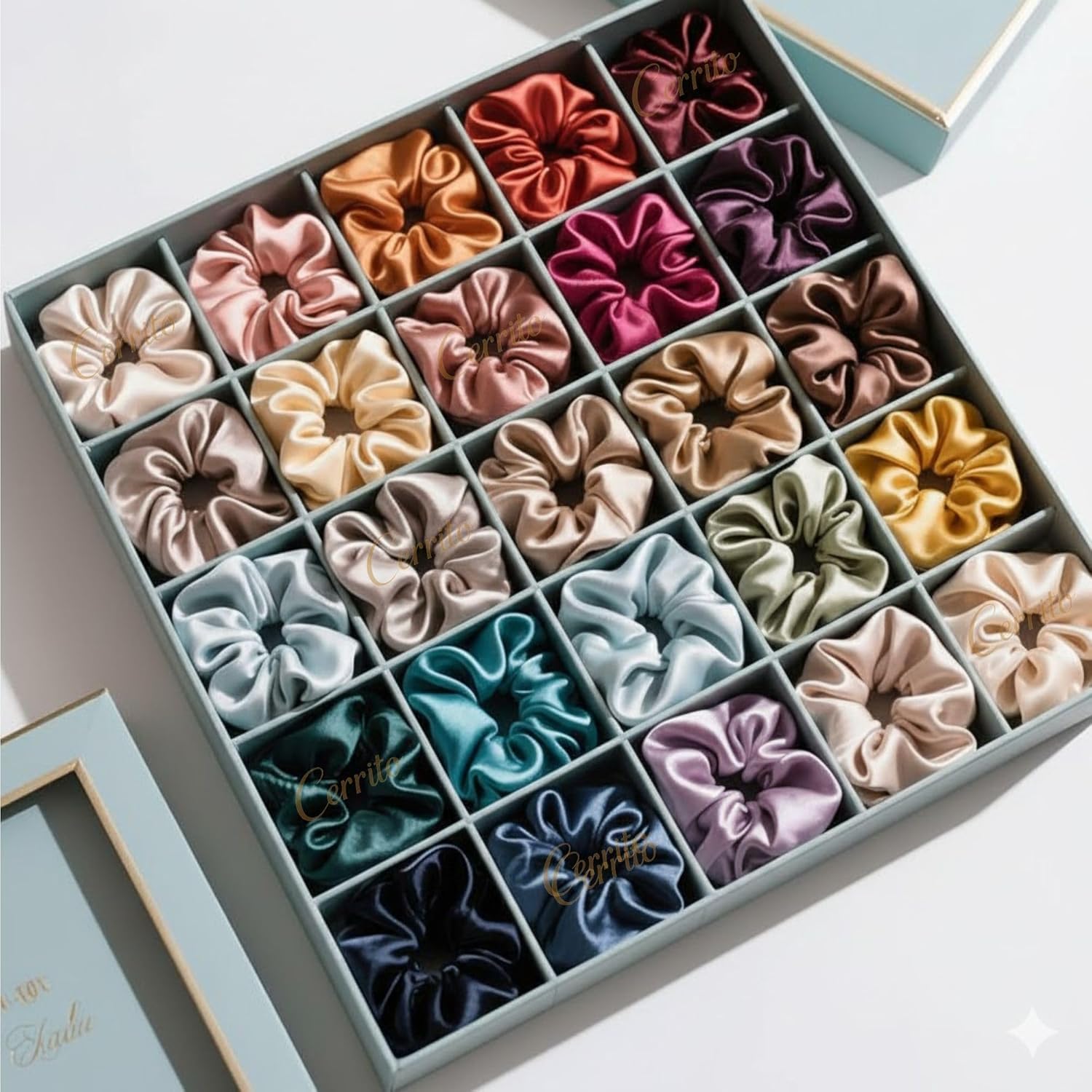
100% hand made, using blended satin.
4.2 Satin Bonnets & Silk Scarves – The Nighttime Ritual
Ancient Connection: Women have covered their hair for protection for millennia. The modern satin bonnet is simply the evolved form of this ancient practice.
Spiritual Significance:
- Creating a “sacred space” for your hair while you sleep
- The act of wrapping your hair becomes a nightly ritual of self-care
- As one mindful user shares: “The gentle embrace of a silk bonnet not only protects my curls but also adds a sense of tranquility to my nighttime routine”
Why They Work:
- Reduce friction, preserving moisture
- Prevent tangles and breakage
- Extend hairstyles
🌙 CREATE YOUR NIGHTTIME RITUAL: The satin bonnet isn’t just for curly hair—it’s for anyone who wants to treat their hair as sacred. Shop satin bonnets on Amazon →
4.3 Bamboo & Neem Wood Brushes – The Modern Kangsi
Ancient Connection: The Kangsi was carved from sacred woods. Today’s bamboo and neem wood brushes carry the same Ayurvedic wisdom.
Spiritual Significance:
- Bamboo is sustainable, representing harmony with nature
- Neem is antibacterial, representing purity and cleansing
- The act of brushing becomes a meditation
Why They Work:
- Anti-static, preventing frizz
- Gentle on scalp
- Distributes natural oils
4.4 Wide-Tooth Combs – The Detangling Prayer
Ancient Connection: The Kangsi had wide teeth on one side specifically for detangling .
Spiritual Significance:
- Detangling represents untangling mental knots
- Starting from the ends teaches patience
- The wide teeth represent gentle strength
Why They Work:
- Prevents breakage on wet hair
- Ideal for curly/textured hair
- Preserves natural curl patterns
🔬 DETANGLE WITH INTENTION: A wide-tooth comb is essential for wet detangling. Use it in the shower with conditioner for the most gentle experience. Shop wide-tooth combs on Amazon →
4.5 Satin Pillowcases – The Invisible Accessory
Ancient Connection: While not a traditional “accessory,” the surface you sleep on is arguably the most important hair care tool you own.
Spiritual Significance:
- Your sleep surface is your nighttime altar
- Choosing satin over cotton is an act of self-respect
- Reduces friction on both hair and skin (preventing sleep lines)
Why They Work:
- Reduces hair breakage and tangles
- Preserves moisture (cotton absorbs natural oils)
- Prevents sleep creases on face
4.6 Mindful Hair Clips – The Modern Passa
Ancient Connection: The passa was worn to draw attention to the face and expressions. Modern hair clips serve the same function—framing your beauty.
Spiritual Significance:
- Choosing a clip that makes you feel beautiful is self-honoring
- The act of placing it mindfully becomes a micro-ritual
- Each clip can carry intention (pearl for purity, gold for prosperity)
👑 ADORN WITH INTENTION: Shop unique passa piece here→

Spiritual T-Shirts for Women
The Mindful Hair Care Ritual – A Step-by-Step Guide
Ready to transform your daily hair care into a spiritual practice? Here’s your guide.
Step 1: Create Your Sacred Space
Before you begin, prepare your environment. This isn’t about perfection, it’s about intention.
- Light a candle or incense
- Play calming music or sit in silence
- Set out your hair care accessories for women—your comb, your scrunchies, your oils
Affirmation: “I create this space to honor my body and my being.”
Step 2: The Pre-Wash Ritual – Oiling with Intention
What you need: Ayurvedic hair oil (coconut, almond, brahmi, or amla)
The Ritual:
- Warm the oil between your palms
- Close your eyes and take three deep breaths
- Begin massaging oil into your scalp with circular motions
- As you massage, set an intention: “With every stroke, I release tension. With every drop, I nourish my roots.”
- Work the oil through to your ends
- Leave for at least 30 minutes (or overnight)
The Science: Scalp massage increases blood circulation to hair follicles. The intention sets the energetic tone for the entire ritual.
Step 3: The Washing Ritual – Cleansing as Purification
What you need: Gentle, sulfate-free shampoo, conditioner
The Ritual:
- As water runs over your hair, visualize it washing away not just dirt, but stress, worry, and negative energy
- Massage shampoo with the same circular motions
- Rinse with cool water (seals the cuticle)
- Apply conditioner, focusing on ends
- Use a wide-tooth comb to detangle in the shower while conditioner is still in
Affirmation: “I cleanse not just my hair, but my mind. I release what no longer serves me.”
Step 4: The Drying Ritual – Gentle Patience
What you need: Microfiber towel or soft cotton t-shirt
The Ritual:
- Gently squeeze excess water (never wring or rub)
- Wrap hair in microfiber towel for 10-15 minutes
- Remove and allow to air-dry partially
The Science: Rubbing creates friction and breakage. Squeezing is compassionate.
Step 5: The Combing Ritual – Meditation in Motion
What you need: Neem wood comb or bamboo brush
The Ritual:
- Wait until hair is 80% dry (wet hair is fragile)
- Start at the ends, working upward in sections
- With each stroke, imagine you’re smoothing out the knots in your life
- Breathe deeply. Don’t rush.
One user shares: “The wooden comb makes your hair stronger and longer. It does not damage the hair even while you brush it hardly” . But mindful combing means you don’t need to brush “hardly” at all.
Step 6: The Adorning Ritual – Choosing Your Energy
What you need: Your chosen hair care accessories for women—scrunchie, clip, gajra, or simply leaving it loose
The Ritual:
- Before you reach for an accessory, pause
- Ask yourself: What energy do I want to carry today?
- Silk scrunchie → gentleness, protection
- Pearl clip → purity, wisdom
- Gajra → beauty, fragrance, joy
- Loose hair → freedom, wildness
- Place the accessory with intention, not haste
Spiritual T-Shirts for Women
Step 7: The Nighttime Ritual – Protecting While You Dream
What you need: Silk bonnet or satin pillowcase, silk scrunchie
The Ritual:
- Before bed, gently detangle
- Apply a drop of oil to ends if dry
- Gather hair loosely (never tight)
- Wrap in silk bonnet OR use satin pillowcase
- As you settle into sleep, offer gratitude: “Thank you, hair, for serving me today. Rest now, as I rest.”
One mindful user reflects: “The silk’s soft texture cradles each strand, reducing friction and preserving moisture. How do you feel when you wrap your hair in a silk bonnet at night? Does it bring a sense of calm and care to your self-care ritual?” .
Curated Product Recommendations – Sacred Tools for Modern Life
Here are our top picks for hair care accessories for women that blend ancient wisdom with modern quality. Each product has been selected for its materials, craftsmanship, and spiritual potential.
| Category | Ancient Inspiration | Modern Product | Price Range | Where to Buy | Why We Love It |
|---|---|---|---|---|---|
| Wooden Comb | Kangsi | INSIME Neem Wood Comb | ₹399-599 | Amazon | Ayurvedic herb-treated, anti-static, promotes growth |
| Silk Scrunchie | Royal silk tradition | Mauli Rituals Pure Silk Scrunchies (Set of 6) | ₹1,299-1,799 | Ajio | Temple-blessed, plant-dyed, supports women artisans |
| Satin Bonnet | Nighttime hair protection | Adjustable Satin Bonnet | ₹399-799 | Amazon | Reduces friction, preserves moisture |
| Temple Hair Clip | Temple jewelry | Lakshmi Temple Hair Clip with Pearl Chains | ₹1,999-2,999 | Ajio | Goddess Lakshmi motif, triple-layer pearls, heirloom quality |
| Maang Tikka | Third eye adornment | Casual/Traditional Maang Tikka | ₹499-1,999 | Ajio / Amazon | Protects from negative energy, centers intuition |
| Wide-Tooth Comb | Ancient detangling | Detangling Shower Comb | ₹199-399 | Amazon | Prevents breakage, ideal for wet hair |
| Bamboo Hair Brush | Sustainable wood | Bamboo Paddle Brush | ₹299-599 | Amazon | Anti-static, eco-friendly, scalp massage |
| Satin Pillowcase | Invisible accessory | Silk/Satin Pillowcase | ₹999-1,499 | Amazon | Reduces friction on hair AND skin |
| Pearl Barrettes | Royal adornment | Set of 4 Pearl Hair Clips | ₹399-799 | Amazon | Symbol of purity, wisdom, elegance |
| Artificial Gajra | Floral adornment | Jasmine/Parijat Gajra | ₹199-499 | Amazon | Year-round fragrance, no wilting |
| Hair Oil (Brahmi/Amla) | Ayurvedic nourishment | Khadi Natural | ₹299-599 | Khadi Natural | Traditional herbs for growth and strength |
| Microfiber Hair Towel | Gentle drying | Microfiber Hair Wrap | ₹399-699 | Amazon | Reduces frizz, gentler than cotton |
| Spiritual Hair Clip | Divine symbolism | Gold Seraph French Barrette | ₹399-699 | Amazon | Angel motif, divine protection, conversation starter |
How to Build Your Sacred Hair Care Kit
For Beginners (Essential Start)
If you’re new to mindful hair care, start here:
- One neem wood comb (replace your plastic comb immediately)
- One pack of silk scrunchies (start with neutral colors)
- One satin pillowcase or bonnet (choose based on your sleeping habits)
Investment: Approximately ₹1,000-1,500
Ritual to start: Begin each morning with 2 minutes of mindful combing. Set an intention for your day.
For the Dedicated (Expanded Kit)
Add to your beginner kit:
- Wide-tooth comb (for shower detangling)
- Ayurvedic hair oil (for pre-wash rituals)
- Microfiber towel (for gentle drying)
- One special occasion accessory (maang tikka or temple clip)
Investment: Approximately ₹2,500-3,500
Ritual to add: Weekly oiling ritual on Sunday evenings.
For the Connoisseur (Complete Sacred Kit)
The full experience:
- All of the above, plus:
- Multiple scrunchie colors (for matching to outfits and moods)
- Artificial gajra (for everyday fragrance)
- Satin pillowcase (if you prefer over bonnet)
- Bamboo brush (for dry detangling)
- Statement piece (serpent clip, pearl barrettes, or spiritual motif clip)
Investment: Approximately ₹5,000-7,000
Ritual to add: Full Solah Shringar-inspired ritual on special occasions (festivals, weddings, or personal milestones).
Frequently Asked Questions
Q1: Are wooden combs really better than plastic?
A: Yes, and the ancient craftsmen knew why. Wooden combs don’t create static electricity, which prevents cuticle damage and reduces frizz. They “do not meddle with the neurotransmitters and electricity in the brain” . Modern trichologists agree that anti-static tools are gentler on hair.
Q2: Can I wear a maang tikka casually, not just for weddings?
A: Absolutely! Contemporary designers have created minimalist maang tikkas perfect for festivals, parties, or even as a statement piece with western wear. The spiritual benefit—centering your third eye—works whether you’re at a wedding or at work.
Q3: What’s the difference between a satin bonnet and a silk bonnet?
A: Satin is a weave (can be polyester or silk); silk is a fiber. Both reduce friction, but silk is more breathable and temperature-regulating. For spiritual practice, silk is considered more “pure” and luxurious—hence its use in temple offerings .
Q4: How often should I replace my hair accessories?
A:
- Scrunchies: Every 2-3 months (when elastic loosens)
- Wooden combs: Years with proper care (avoid water exposure)
- Claw clips: When springs weaken
- Bonnets: Every 6-12 months
- Metal clips: Indefinitely with proper storage
Q5: Can men use these accessories and rituals?
A: Yes! In ancient India, Rajput and Sikh men used small wooden combs for their beards . The Kangsi was traditionally used by both men and women. Hair care is for everyone.
Q6: Where can I buy authentic traditional hair accessories?
A: For authentic Kangsi, visit craft fairs or exhibitions (like Dastkar). For modern equivalents, Amazon and Ajio have extensive collections. The products recommended above are great starting points for quality and authenticity.
Q7: Is the spiritual significance “real” or just marketing?
A: The spiritual significance of hair care accessories for women is documented in ancient texts, temple carvings, and living traditions . While modern marketing may exaggerate, the core meanings—protection, prosperity, intuition, beauty—are authentically traditional.
Q8: How do I know which accessory is right for my hair type?
A:
- Curly/textured hair: Silk bonnet, wide-tooth comb, satin scrunchie
- Fine/straight hair: Neem wood comb, gentle claw clips, avoid heavy accessories
- Thick hair: Jumbo claw clips, sturdy wooden combs, double-scrunchies
- All types: Silk/satin accessories are universally beneficial
Q9: Can I use these rituals if I have short hair or hair loss?
A: Absolutely. The rituals are about intention and self-care, not hair length or density. Scalp massage (with oil or a wooden comb) promotes circulation and may support growth. Adorning short hair with clips or scarves is equally valid.
Q10: What’s the one accessory I should buy first?
A: A neem wood comb. Replace your plastic comb immediately. This one change, using a wooden comb daily, carries the most ancient wisdom and modern scientific validation . Everything else builds from this foundation.
🎁 Conclusion: Your Hair, Your Crown, Your Ritual
Here’s the truth, and it’s worth sitting with. Your hair is not a problem to be solved. It is a crown to be honored.
In ancient India, Kesh Shringar was never vanity. It was a spiritual act—a recognition of the divine feminine energy that flows through every woman . The Solah Shringar wasn’t about looking good for others. It was about feeling complete within yourself .
The maang tikka protected your third eye. The jadanagam awakened your Kundalini. The wooden comb kept your energy clear and your mind cool. The gajra surrounded you with the fragrance of devotion.
And today, the same energy lives in your silk scrunchie, in your satin bonnet, in the gentle stroke of a neem wood comb through your hair.
So tomorrow morning, when you stand before your mirror, don’t rush. Pause. Take a breath. Choose your hair care accessories for women with intention, not haste.
And remember—you are not just “doing your hair.” You are continuing a 5,000-year-old tradition of honoring yourself as sacred.
Your crown is waiting. Wear it with pride.
🛒 BUILD YOUR SACRED HAIR CARE KIT:
Essential Product Shop Now Wooden Comb INSIME Neem Wood Comb Amazon → Silk Scrunchie Temple-Blessed Set Mauli Rituals → Temple Hair Clip Lakshmi with Pearl Chains Amazon Satin Bonnet Adjustable Night Cap Amazon → Maang Tikka Casual/Traditional Styles Ajio → Complete Kit All of the above bundled [Shop Bundle →]
Disclaimer: This article contains affiliate links. If you purchase through these links, we may earn a commission at no extra cost to you. All products are independently selected and reviewed based on quality, materials, and spiritual alignment. Prices are approximate and may vary by seller and over time.